




A magnitude 7.8 earthquake struck the southern Philippines on Monday morning, killing at least 37 people, injuring hundreds and displacing roughly 20,000 residents across Mindanao island. Rescue teams searched collapsed buildings on Tuesday as officials assessed widespread damage to homes, schools, hospitals and infrastructure.
General Santos rescue
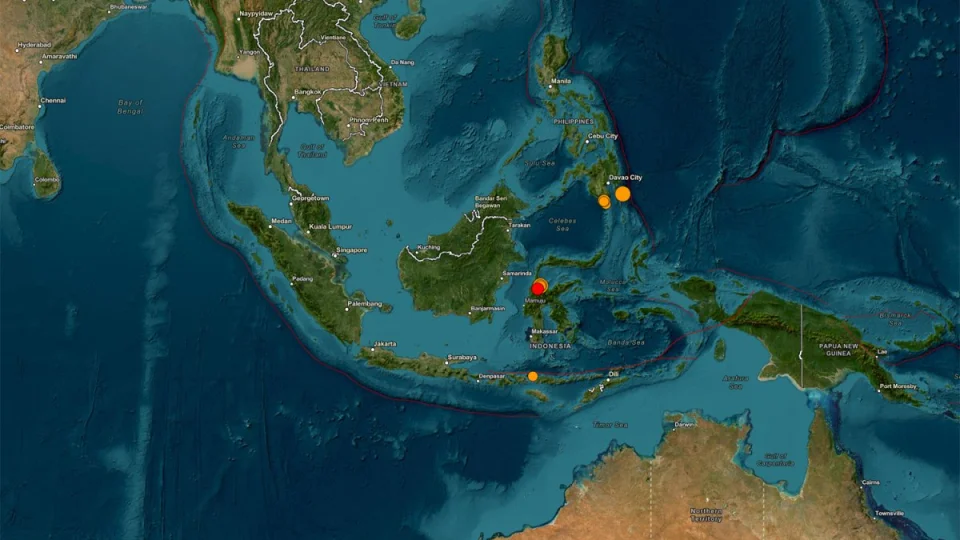
The quake struck at about 7:37 a.m. local time on Monday, centred at sea roughly 20 km (12.4 miles) off the coast of Sarangani province at a depth of about 33–35 km (20–21 miles), according to Philippine and U.S. geological agencies. Tremors were felt strongly across Mindanao and as far as Manado, Indonesia, about 420 km (261 miles) away.
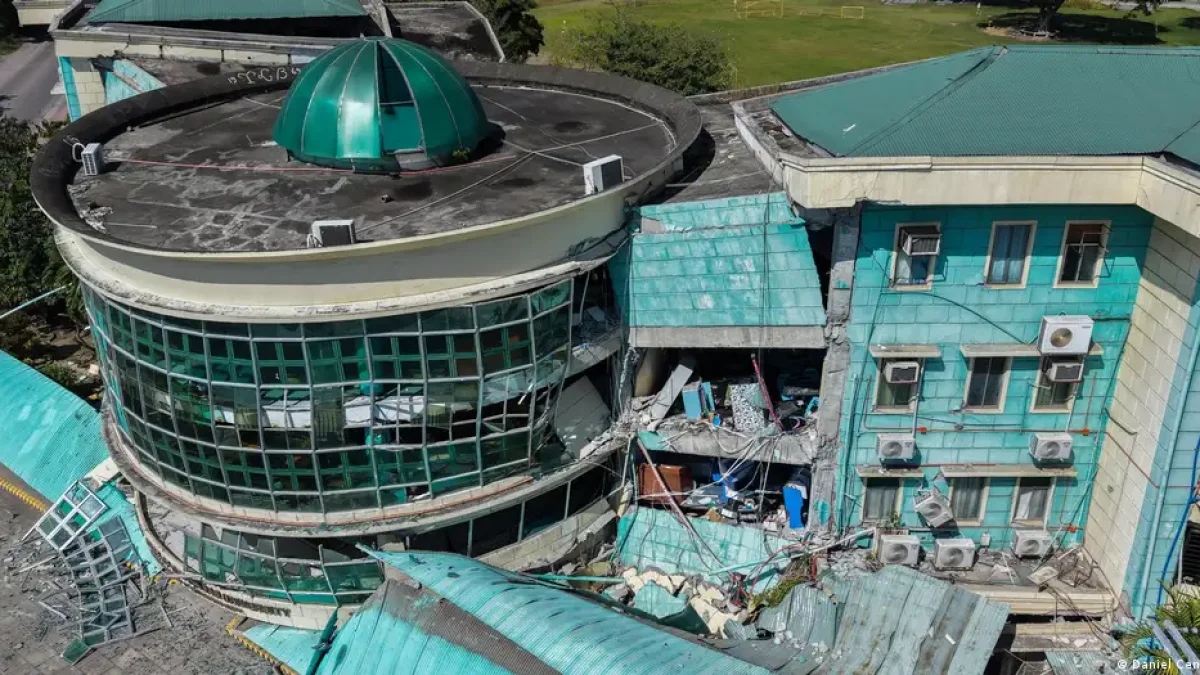
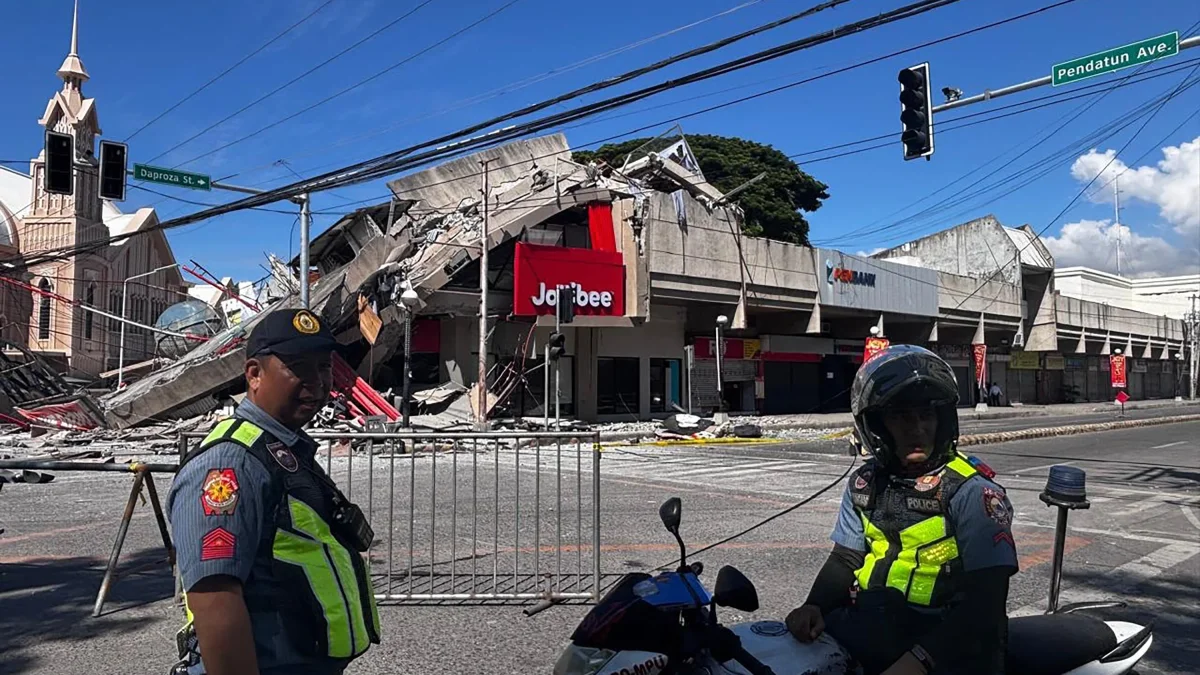
General Santos, a port city of more than 700,000 people and the area worst hit, was placed under a state of calamity. Scenes of devastation included collapsed buildings, debris across streets and toppled power lines. Regional fire officer Edgar Tanawan, leading rescue operations at a collapsed commercial building housing a grocery store and other businesses, said two people had been pulled out alive, a third was found dead and two others were still believed trapped inside with no signs of life detected by scanners.
"It's difficult to accept, as a mother, that my son is still trapped there," said Dioslinda Deluvio, 65, waiting outside the building for news of her son. "My only call is to have him retrieved today so we can be at peace."
Officials said four people remained missing on Tuesday. Search teams worked at a supermarket, warehouse, grade school and other damaged structures. Video showed a Jollibee branch in General Santos collapsing; the chain said all staff in earthquake-hit areas were safe. The city's international airport remained shut, with 17 domestic flights cancelled according to the Civil Aviation Authority of the Philippines and 63 cancellations reported by civil defence officials.
Casualties and displacement
Authorities on Tuesday put the confirmed death toll at at least 37, with injured figures ranging from more than 200 to 487 depending on official counts. More than 20,000 people were displaced, at least temporarily, with many fleeing to emergency shelters and evacuation centres.
At least 13 people were killed in General Santos in collapsed buildings or by falling debris. In Glan, a mountainside town in Sarangani province near the epicentre, a landslide buried several houses. Provincial disaster official Rene Punzalan said 13 villagers died in the landslide and four others were killed elsewhere in the province. Rafaelito Alejandro of the Office of Civil Defense said 18 people were killed in Sarangani, most in the landslide.
Deaths were also reported in South Cotabato, Davao Occidental and on Balut Island off Mindanao's southeastern coast. Initial government assessments found about 2,000 houses and 117 government buildings damaged, while roughly 6,000 public school buildings required safety checks. In Jose Abad Santos, Davao Occidental, Mayor Jason John Joyce said landslides buried the town's only highway, leaving relief goods to be flown into remote villages.
Schools and hospitals
The quake hit on the first day back at school after a two-month summer break. Schools remained closed as authorities inspected buildings that sustained minor to severe damage. "We cannot force the immediate reopening of schools because we have to ensure the integrity of buildings," Alejandro said.
More than 100 students and teachers were gathered for a flag-raising ceremony in Malita, Davao Occidental, when the ground shook; the school principal said most remained seated and prevented injuries. In Davao City, more than 100 students sustained bruises and others fainted during morning ceremonies. Social media video showed children sheltering outdoors as buildings swayed. Science minister Renato Solidum said many students survived because Monday morning assemblies kept them outside.
In General Santos and Sarangani, patients were treated in makeshift tents as officials worked to ensure hospitals were safe. Health Secretary Teodoro Herbosa said restoring power was critical, as outages limited access to sensitive treatments needed by patients.
Tsunami and aftershocks
The earthquake briefly triggered tsunami warnings across the region, forcing coastal residents to move to higher ground. The Pacific Tsunami Warning Center said the threat had largely passed about five hours after the quake, and Philippine officials lifted warnings by mid-afternoon. Waves of 1 metre (3 feet) were monitored in Sultan Kudarat and Sarangani, with a peak of 1.4 metre (4.6 ft)s (4.6 feet) recorded at Kiamba. Smaller waves were measured in Indonesia, Palau and Japan. Six stilt shanties were damaged in a coastal village in Zamboanga del Sur.
The Philippine Institute of Volcanology and Seismology recorded 23 strong aftershocks, with the strongest measuring magnitude 6.7. The U.S. Geological Survey tracked more than a dozen aftershocks above magnitude 5, while other agencies reported higher totals. The Philippines sits on the Pacific "Ring of Fire," and Monday's quake was linked to movement on the Cotabato Trench. Teresito Bacolcol, director of the seismology agency, said it was the largest quake in the area in 50 years and the strongest to hit the Philippines this year. A magnitude 7.9 earthquake on the same trench in 1976 triggered tsunamis that killed thousands of people.
Government response
President Ferdinand Marcos Jr. directed disaster-response agencies to act immediately, cancelled classes and deployed senior defence and mitigation officials from Manila to oversee search and rescue, distribute food and construction materials, and assess damage to bridges and roads. Transportation and health secretaries flew to Mindanao to coordinate the response.
The United States said it was coordinating with Manila and stood ready to support Philippine response efforts. France, Japan and New Zealand also expressed support. Officials said they hoped the death toll would not rise further, with search and rescue the priority on Tuesday. The quake came months after a deadly tremor struck the central Philippines, adding to the archipelago's long history of seismic disasters.