





A few hundred feet from a McDonald's and a strip mall, sandwiched between busy roads in West London, a lush urban wetland is being built by an unusual group of city residents: beavers. Paradise Fields in Greenford, Ealing used to flood regularly during heavy rainstorms — water sweeping into local streets and inundating Greenford Central line station on the London Underground. The problem dated back to the 1970s, and council engineers had considered carving out an artificial reservoir with heavy machines and concrete. Then conservationists asked a different question: why not try a nature-based solution?
"Why don't we bring back beavers?" said Sean McCormack, a veterinarian, wildlife conservationist and project leader at the Ealing Beaver Project. In October 2023, a family of five wild Eurasian beavers — two adults and three kits — was released onto a 9.7-hectare (24-acre) stretch of land that McCormack described as "kind of a forgotten and neglected space." Wild beavers had been absent from London for roughly 400 years, hunted to extinction for fur, meat and scent-gland secretions used in perfumes and food flavouring.
Beaver engineers
These semi-aquatic rodents are remarkable natural engineers. Their teeth are fortified with iron that gives them a striking orange colour, allowing them to chisel through sticks and trees. They eat bark and use the wood to build dams, creating natural reservoirs that offer refuge from predators — and, for humans, natural flood control.
Beaver engineering can turn the landscape into a sponge, holding more water when it rains so less runs off to flood downstream. They also dig canals — "like little micro-streams that radiate outward from their ponds across valley bottoms like a spiderweb of water," said Emily Fairfax, an assistant professor of geography at the University of Minnesota. "These further mitigate flood damage by spreading the floodwaters out over a larger area."
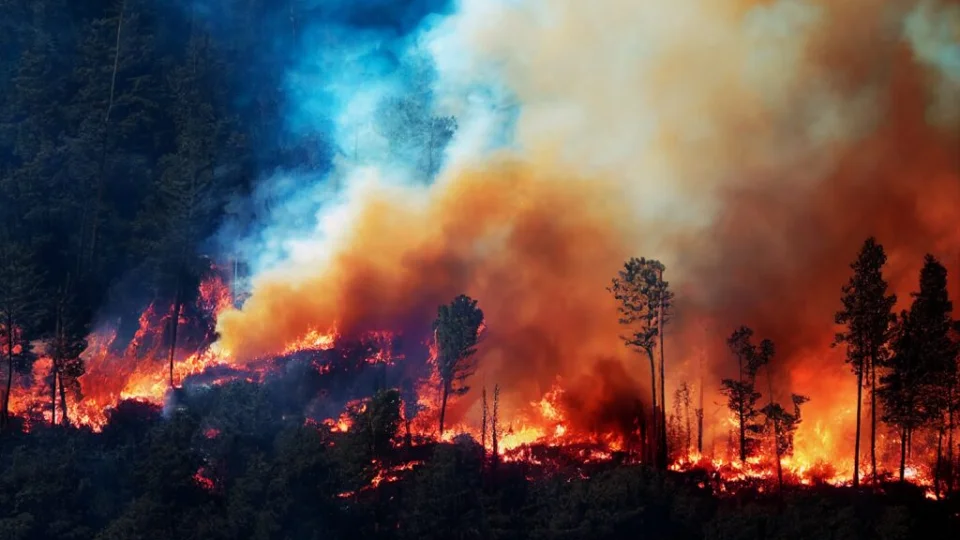
At Paradise Fields, storm water from Costons Brook passes through the site before reaching urban Greenford. Within months of the beavers' arrival, they had built at least five dams and a network of wetlands that slow the flow. Fairfax noted that beaver-created wetlands can also help during droughts — water percolates into surrounding dry areas — and can guard against wildfires because the land is essentially too wet to burn.
Measured results
So far, the London initiative has been a success. By the beavers' second winter at the site, there was no flooding in the target area for the first time in a decade, McCormack said. The high flood-risk zone downstream of Paradise Fields did not flood in the winters of 2024 and 2025 after more than a decade of inundation — while other nearby areas still suffered flooding during the same storms.
The beavers' work has created a mosaic of habitats, encouraging birds, butterflies, bats, freshwater shrimp and fish to return. Tree felling has let sunlight back into the brook, while slower flows have improved water quality through natural filtration. Antisocial behaviour on the site has fallen by 90%, project partners report.
There are currently eight beavers at Paradise Fields, plus a new litter of kits born in spring 2026 that staff expect to emerge from their lodge later in June. Urban beaver officer Seniz Mustafa said the community of Greenford was "so happy" with the animals' arrival, which has drawn thousands of visitors to the site.
Community reception
The project is a collaboration between Citizen Zoo, Ealing Wildlife Group, Friends of Horsenden, and Ealing Council, supported by the Beaver Trust and the Mayor of London. It created the UK's first fully accessible urban beaver enclosure, allowing visitors of all abilities to experience rewilding firsthand — including guided "beaver safaris."
Sir David Attenborough featured the project in his Wild London BBC documentary, saying: "The whole wetland has been brought back to life, and it can now retain a lot more water. Incredibly, for the first time in a decade, residential areas downstream have been flood-free." A Mayor of London spokesperson praised the beavers for helping stop flooding at a local station, transforming Paradise Fields into a flourishing wetland and improving biodiversity.
Ealing Council cabinet member for climate action Dominic Moffitt called it "a powerful example of how innovative, nature-based approaches can complement traditional flood management, deliver lasting benefits for the environment, and enable better living for Ealing residents." During recent record-breaking rainfall at Paradise Fields, the Central line station and surrounding area remained dry, the council said.
Climate context
As climate change supercharges storms and other extreme weather, rewilding projects are emerging as one solution — harnessing the skills of animals to create more resilient landscapes. Ealing Council noted that prior to the reintroduction, large-scale interventions had straightened and concreted the Brent River channel to try to prevent flooding — engineering that did not solve the problem at Greenford.
Wetlands are among the most carbon-dense ecosystems on Earth, yet more than a third of the world's wetlands have disappeared since 1970. The beaver project hopes to show how restoring wetland species can regulate the climate and alleviate the effects of climate change — even in a dense urban landscape sandwiched between polluted roads.
"They effectively turned this site into a giant sponge that can take heavy rainfall and slowly release water back into the landscape, creating a lot more resilience for flooding," McCormack said in May 2026. The Ealing Beaver Project is one of dozens of sites across Britain where land managers are using beavers to restore wetlands and tame flooding.
Cautions and limits
But beavers cannot be released just anywhere, Fairfax warned. There needs to be enough food, water and space; humans near the site must be receptive; and communities need contingency plans in case beavers engineer too close to infrastructure.
Not everyone embraces beaver rewilding, especially when animals are introduced without permission — a tactic sometimes called "beaver bombing." George Holmes, a conservation professor at the University of Leeds, said beaver tunnels in riverbanks can be big enough to trap cattle and machinery, and that farmers worry about flooding of farmland. "Beavers are seen as just another thing that farmers didn't ask for, which is imposed on them," he said, urging caution against overpromising what beavers can deliver.
Fairfax acknowledged the scepticism: "It does sound absurd to trust a 32 kg (70 lb) pond rat to make engineering decisions and control the waterways we depend on." But beavers have been engineering ecosystems for millions of years, she added — "in the right areas, we should trust them to build wetlands. That's their specialty."
Ripple effects across Britain
The Ealing success has inspired further urban conservation. Croydon Council is exploring a similar beaver reintroduction at South Norwood Country Park, potentially arriving by 2028. Alongside a beaver project in Enfield launched in 2023, it marks a broader return of Eurasian beavers to the British capital after centuries of absence.
Beaver rewilding is also taking off across the United States, especially in the West. Yet each site requires careful licensing — the Ealing release operated under a monitored five-year trial with Natural England frameworks — and community buy-in before rodents that weigh roughly 32 kg (70 lb) are trusted with flood management near homes and transport hubs.
London weather and urban flood risk
Natural sponges like Paradise Fields matter most when intense rain arrives — and London summer weather can deliver exactly that. In mid-June 2026, afternoon temperatures across Greater London typically reach 22–26°C (72–79°F) with moderate humidity, while warm, moisture-laden air can trigger afternoon and evening thunderstorms that dump heavy rain in short bursts. Those convective downpours overwhelm hard surfaces and ageing storm drains faster than steady all-day rain — the pattern that used to send water racing through Costons Brook toward Greenford station.
When planning travel through West London during thunderstorm watches, check whether heavy rain is forecast as isolated cells or a broader frontal band. Sustained multi-hour rainfall poses the greater flood risk for urban catchments; a passing 15-minute shower may barely register downstream if wetlands and beaver dams are holding water on site. Conversely, back-to-back storm days — increasingly common as a warmer atmosphere holds more moisture — test both engineered drainage and nature-based buffers.
Residents and commuters near the A40 corridor and Central line stations from Northolt to Ruislip should treat Met Office yellow or amber rain warnings as signals to allow extra time and avoid known flood pinch points, even as Paradise Fields continues to absorb what it can.
Track London weather on SatMeteo
From record winter rainfall to summer thunderstorm bursts, flood resilience in London depends on both engineering and ecology — and on knowing when heavy rain is heading your way. Check hourly forecasts for the capital, browse conditions across the UK, and use the live temperature map on SatMeteo to follow heat building ahead of convective storm setups in real time.