


France is facing its second heatwave of 2026 as Météo-France places 26 departments — from the Paris Basin to Haute-Savoie — under orange canicule alert from midday Thursday 18 June. Peak temperatures are forecast to approach 40°C (104°F) on Sunday and Monday around the summer solstice, while national rail operator SNCF has preemptively cancelled 71 Intercités services through Monday 22 June to avoid air-conditioning failures on heat-vulnerable Corail trains.
Although astronomical summer does not begin until Sunday 21 June, the episode follows an unusually hot spell in May that broke records across roughly half the country. Roughly a quarter of metropolitan France now sits under the second-highest heat alert, with dozens more departments on yellow vigilance as authorities urge residents to stay hydrated and check on vulnerable neighbours.
Orange alert and where heat will peak
Météo-France raised the orange threshold at 12:00 on Thursday 18 June across a band stretching from Île-de-France through the Centre-East and into parts of the Alps. Departments affected include Paris, all of the inner capital region (Seine-et-Marne, Yvelines, Essonne, Hauts-de-Seine, Seine-Saint-Denis, Val-de-Marne, Val-d'Oise), the Rhône, Côte-d'Or, Loiret, Cher, Puy-de-Dôme, Ain, Jura, Haute-Savoie and neighbouring areas in the Grand Est and Bourgogne.
On Thursday, temperatures of 35°C (95°F) are expected to be “frequently reached” in the Paris Basin, the Loire Valley, Grand Est, Auvergne and the Lyon area, with readings up to 38°C (100°F) in south-western and western Burgundy. Météo-France said the alert would remain in place until midnight Friday for a heatwave “expected to last until next week”, peaking on Sunday or Monday when local highs could touch 40°C (104°F) in the Rhône Valley and Île-de-France.
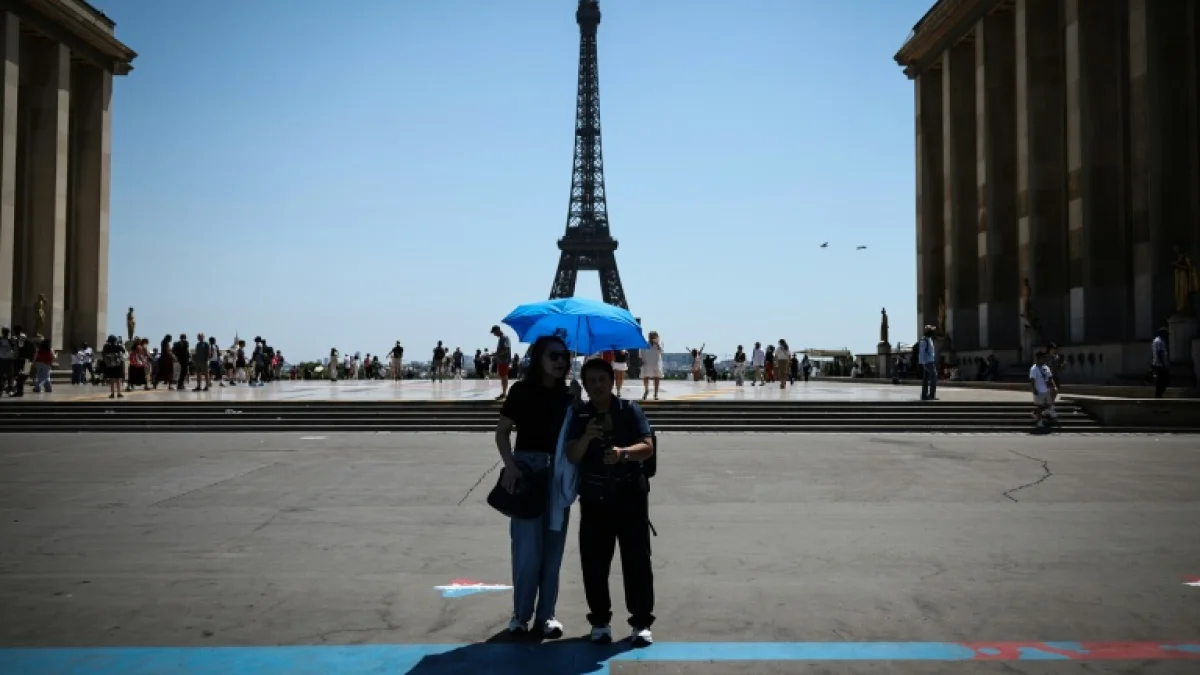
The timing matters: the summer solstice on Sunday 21 June brings the longest day of the year, adding hours of sunshine that reinforce daytime heating. Forecaster Christelle Robert noted that the shortest night of the year also limits nocturnal cooling — warm overnight lows make the episode harder to bear even before Sunday's Fête de la Musique, when Paris and cities nationwide expect huge outdoor crowds.
Week-ahead outlooks for the capital point to a sharp spike Thursday and Friday — around 36°C (97°F) and 37°C (99°F) respectively in Paris — before a modest dip Saturday and renewed exceptional heat on solstice weekend. In the Rhône corridor, Lyon sits inside the orange zone with mid-30s °C (mid-90s °F) building through the week, while Marseille on the Mediterranean coast shares the broader French heat signal even as sea breezes sometimes shave a degree or two off afternoon peaks.
SNCF cuts 71 Intercités trains
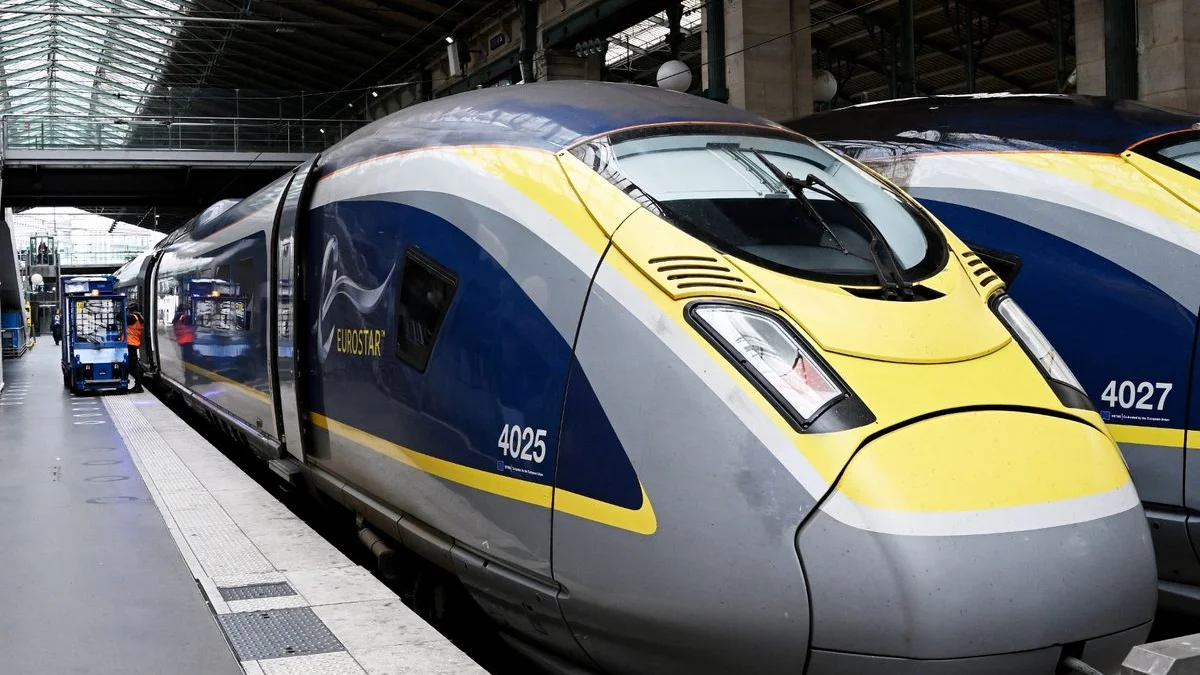
SNCF Voyageurs said it is cancelling 71 Intercités services between Thursday 18 June and Monday 22 June to “prevent potential air-conditioning failures linked to the very high temperatures”. The operator stressed that the figure represents only about 0.1% of the trains it runs on a typical day — targeted preventive cuts, not a network shutdown.
The main affected corridors are:
- Paris–Orléans–Limoges–Toulouse (POLT) — serving Orléans, Limoges, Brive-la-Gaillarde, Cahors and Toulouse
- Paris–Clermont-Ferrand
- Bordeaux–Marseille Southern Transversal
On these routes, older Corail carriages carry air-conditioning systems that are not designed for prolonged exposure above roughly 35–37°C (95–99°F) in direct sun. SNCF fears in-journey AC failure would strand passengers in overheated coaches — the same engineering constraint that drove similar trimmings during past canicule episodes.
Passengers with bookings on affected trains should check SNCF Connect before travelling; exchanges and refunds are generally available before departure. TGV high-speed services and most other lines are not part of this cancellation batch, but anyone connecting through Paris over the solstice weekend should build extra time — especially with a separate strike call at Roissy-CDG, Orly and Le Bourget airports on 18 June compounding pressure on the capital's transport network.
Travel tips for the heatwave window:
- Confirm train status the evening before and again on departure morning — preventive cancellations can be added as forecasts firm up.
- Carry water on Intercités routes; even on air-conditioned stock, platform waits in full sun quickly raise heat-stress risk.
- Consider TGV alternatives on axes where high-speed stock remains in service, accepting that last-minute seats may be scarce.
- If heading south for the solstice or Fête de la Musique, allow a full buffer day for rebooking rather than tight same-day connections through Paris.
Schools, exams and public cooling
The heat arrives at an awkward moment for France's school calendar. Written exams for the baccalauréat finish on Thursday, while oral exams scheduled from Monday 22 June may be postponed in some academies. Education Minister Édouard Geffray said he hoped “no exams” would run in afternoons during the peak, and that families would be informed within 48 hours if local recteurs order delays.
There is no national school-closure order. Decisions sit with mayors, prefects and academy heads — as they did during the June 2025 heatwave, when roughly 2,200 schools closed nationwide. In Paris, about 10 middle schools have already adjusted Thursday and Friday schedules, suspending afternoon classes while keeping basic reception open. In Tours, Green Party mayor Emmanuel Denis said he would close the city's 58 teaching sites if temperatures hit 40°C (104°F). Smaller communes including Le Blanc (Indre) and Neuillé-Pont-Pierre (Indre-et-Loire) have announced selective afternoon or full-day closures for Friday and Monday.
Many French school buildings still lack adequate cooling — a deficit that building-renovation specialists say cannot be solved by hydration advice alone. In Paris, deputy mayor Emmanuel Grégoire authorised swimming in the Canal Saint-Martin from Wednesday evening under lifeguard supervision, turning a stretch of the Récollets basin into an official cooling zone after young people plunged in during May's scorching week.
Second heatwave of 2026 — and a warming pattern
May 2026 already delivered record-breaking warmth across large parts of France. Météo-France climatologist Matthieu Sorel said the country is experiencing “heatwaves that are increasingly frequent, more widespread and more intense — a clear sign of climate change”. Of the 51 heatwaves recorded nationwide since 1947, 34 have occurred since 2000 and 26 since 2011 — a steepening curve that makes infrastructure built for 20th-century summers look increasingly fragile.
Rail AC limits, unshaded schoolyards and housing without mechanical cooling are symptoms of the same gap: public systems designed before France's summers turned this hot, this early, and this long. Heatwaves that once peaked in August now arrive in May and June with growing regularity.
Track the heatwave on SatMeteo
Orange alerts, overnight lows and peak timing can shift quickly as models update around the solstice. Compare hourly and week-ahead outlooks for Paris, Lyon and Marseille, and use the live temperature map to see how the heat dome is building across France before you travel or plan outdoor events this weekend.