




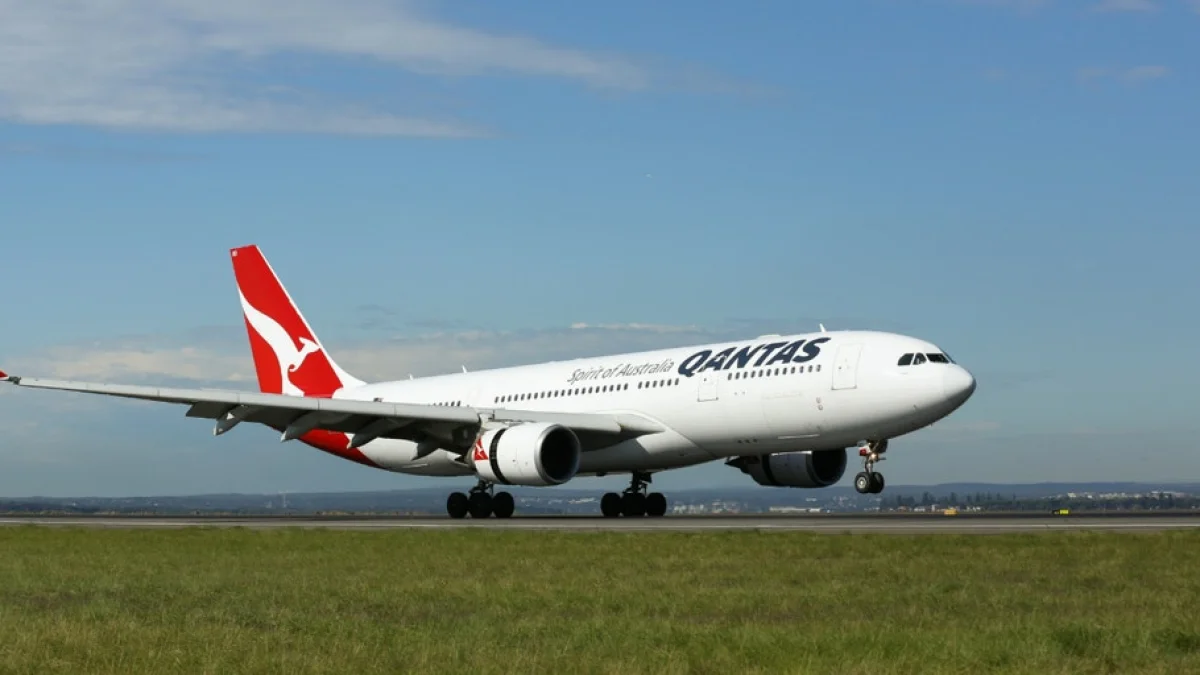
Qantas has confirmed what will become the world's longest regularly scheduled commercial flight: a nonstop link between Sydney and London Heathrow lasting up to 22 hours, launching in October 2027. The Australian carrier unveiled the plan on 17 June 2026 at Airbus' manufacturing facility in Toulouse, France, alongside the first of its specially configured Airbus A350-1000ULR aircraft built for the long-awaited Project Sunrise initiative.
Tickets for the historic route will go on sale in February 2027, ahead of a service that will become the first regularly scheduled nonstop connection between Australia's east coast and the United Kingdom. For travellers, the milestone is not only about endurance at altitude — it is also about what awaits on the ground at both ends of a 16,000 km (10,000 miles) journey that crosses hemispheres, seasons and time zones in a single sitting.
Project Sunrise and the Kangaroo Route
Qantas first announced Project Sunrise in 2017, challenging aircraft manufacturers to push commercial range far enough to connect Sydney and Melbourne directly with London and New York. Nearly a decade later, Sydney–London is the first route confirmed — hardly a surprise given the prestige of the Kangaroo Route, which Qantas has flown since 1947.
When that inaugural service left Sydney, it stopped seven times — Darwin, Singapore, Calcutta, Karachi, Cairo, Castel Benito and Rome — before reaching London. Each generation of long-haul aircraft removed a stop. Group CEO Vanessa Hudson said the Sunrise launch removes the last one: "Since we first flew the Kangaroo Route in 1947, where we stopped seven times on the way to London, every generation of aircraft has taken a stop out of the journey. Today, we're taking out the last one."
Qantas has already proved appetite for ultra-long-haul from Western Australia: more than 1.7 million passengers have flown its existing nonstop services from Perth to London, Rome and Paris since 2018, and Hudson noted that Perth–London delivers the highest customer satisfaction on the Qantas network. Sydney–New York will follow later in 2027, with a confirmed date expected early next year.
The Airbus A350-1000ULR
The aircraft making the route possible is a bespoke variant of Airbus' widebody twin. The A350-1000ULR integrates an additional rear centre fuel tank into the airframe, extending range by roughly 1,000 nautical miles and enabling flights of almost 10,000 nautical miles — enough to cover the Sydney–London great circle without a fuel stop.
Qantas has ordered 12 A350-1000ULRs for Project Sunrise, plus 12 standard A350-1000s for its broader long-haul fleet. The Sunrise jets will carry 238 passengers across four cabin classes, configured specifically for crew rest, passenger comfort and the demands of 20-plus-hour sectors. The first test aircraft (MSN 707) completed its maiden flight in Toulouse on 2 June 2026, reaching slightly above 41,000 feet during a three-hour 43-minute sortie. The first delivery to Qantas is scheduled for April 2027, with a second aircraft already in advanced final assembly.
What the route means for passengers
The distance is extraordinary — roughly 16,000 km (10,000 miles) nonstop — but Qantas argues the real gain is time on the ground. The carrier says Sunrise will cut up to four hours off the fastest one-stop itineraries between Sydney and London compared with existing services such as QF1/QF2, which route via Singapore.
When the route enters service it is expected to surpass Singapore Airlines' nonstop Singapore–New York service, currently regarded as one of the world's longest regularly scheduled flights at roughly 18–19 hours. Qantas cited internal research showing 70% of surveyed Australians would consider booking a nonstop flight of that length, rising to 80% among premium travellers.
Pilots, cabin crew and maintenance personnel are already undergoing training ahead of the aircraft's arrival. Sales opening in February 2027 will be the first practical test of whether a market that has waited since 2017 is ready to spend nearly a full day aloft without a layover.
Weather at both ends: October launch timing
October 2027 sits at a seasonal crossroads — spring in the Southern Hemisphere and autumn in the Northern Hemisphere — and that contrast shapes how the trip feels on arrival as much as the seat configuration does in the air.
Sydney departure: late Australian spring
Sydney in October typically offers some of the year's most comfortable flying weather at Kingsford Smith. Daytime highs usually sit around 22–24°C (72–75°F) with lengthening daylight and moderate humidity before the summer heat builds. Afternoon shower risk increases through the month as thunderstorm season approaches, but severe disruption at the airport is relatively uncommon compared with summer convection peaks.
Travellers leaving Sydney in October should expect mild mornings, strong UV even under cloud cover, and occasional evening sea breezes along the coast. Build buffer time if connecting domestically — spring westerly changes can bring gusty conditions on approach.
London arrival: early British autumn
Passengers stepping off after 22 hours will land in a different season entirely. London in October averages highs near 14–16°C (57–61°F), with shorter days, frequent Atlantic fronts and rain on roughly half of all days. Heathrow sits west of central London and can see gusty westerly winds during autumn low-pressure systems — conditions that occasionally trigger holding patterns or go-arounds even for routine approaches.
The temperature swing from Sydney's spring warmth to London's cool, damp autumn can feel sharper than the numbers suggest, especially after a long cabin environment held near 21–23°C (70–73°F). Layers, a waterproof outer shell and ground-transport plans that do not rely on waiting curbside in rain will matter more than on a summer arrival.
En-route weather and block time
Great-circle routes between Australia and Europe cross the equator and often ride the polar jet stream over southern and central Asia. Tailwinds on eastbound sectors and headwinds westbound can shift block times by an hour or more seasonally — one reason Qantas quotes "up to 22 hours" rather than a fixed figure. Winter jet-stream peaks tend to shorten London-bound flights slightly; summer patterns can lengthen them. Turbulence associated with jet-stream boundaries is also more common on ultra-long sectors, though modern A350 wing loading handles moderate chop smoothly.
Planning ahead for Sunrise bookings
With sales opening in February 2027, travellers have time to think beyond fare class and seat pitch:
- Seasonal choice: October launch flights sit in a shoulder window — pleasant in Sydney, cool and wet in London. Later northern-summer departures from Sydney mean winter arrivals in London; reverse seasons apply for westbound returns.
- Jet lag: A 22-hour block crossing roughly 10 time zones demands sleep strategy regardless of cabin. Eastbound Sydney–London loses hours; westbound gains them — but neither direction is gentle on circadian rhythm.
- Ground weather: Autumn wind and rain at Heathrow can compound fatigue after ultra-long-haul. Pre-booking covered transport or allowing a recovery night before onward travel reduces stress.
- Comparison shopping: One-stop routes via Singapore, Doha or Dubai still offer lower fares and shorter single-leg durations for travellers who prefer a break on the ground.
Track Sydney and London weather on SatMeteo
Ultra-long-haul planning is weather planning — at departure, arrival and every hour in between. When Project Sunrise tickets go on sale in February 2027, compare seasonal outlooks for Sydney and London, and use the live temperature map to see how spring warmth in Australia and autumn cool across the UK are shaping up before you commit to the world's longest nonstop commercial flight.