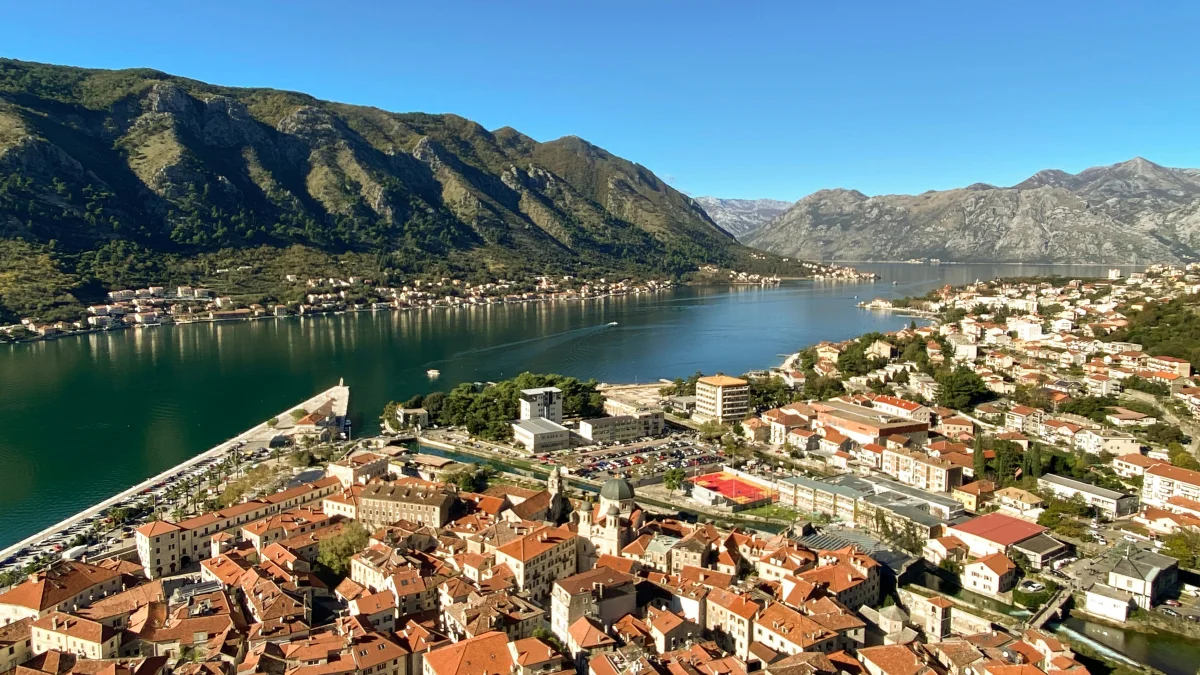
European travel in 2026 is splitting in two directions. Flight-search data and industry surveys show holidaymakers still chasing Mediterranean sunshine — but many are also looking beyond Barcelona, Rome and Dubrovnik for destinations that feel less crowded and more affordable. Rome2Rio's 2026 Travel & Mobility Trends Report recorded a 35% rise in searches for smaller cities globally, while the European Travel Commission reports growing interest among long-haul visitors in local, less saturated experiences.
The Balkans sit at the intersection of both trends. From Montenegro's fjord-like bays to Albania's sandy Riviera, Bosnia's Ottoman old towns and North Macedonia's lakeside UNESCO sites, the region delivers the Adriatic-and-mountain culture travellers associate with Western Europe — often at a fraction of the cost. After record warmth across much of the continent in late spring, understanding what June through September typically brings also helps you pick the right window for heat, crowds and value.
Unlike the surge toward Greece, Spain and Italy documented in Southern Europe flight-search data this summer, the western Balkans remain a secondary discovery zone for many EU and UK passport holders — close enough for a long weekend, varied enough for a two-week loop, and still forgiving on mid-range budgets when you mix coast with inland stops.
What the search data suggests
Travel analysts tracking 2026 summer intent see two parallel stories. Established Mediterranean hubs continue to dominate headline demand, but smaller-city and value-led searches are rising faster in percentage terms. Indie travel guides and budget aggregators consistently rank Albania, Bosnia and Serbia among Europe's cheapest countries for daily spend, while Montenegro and Croatia comparisons show accommodation gaps of 30–50% on equivalent summer nights in less saturated neighbours.
Euronews Travel, BBC Travel and several 2026 destination roundups have singled out Kotor, Tirana and Ohrid as places where infrastructure, low-cost carriers and social-media discovery are converging before peak-season crowding catches up. That window — roughly 2024 through 2027 in many writers' estimates — is exactly when weather-aware planning matters: you want warm swimming weather without booking the hottest, most expensive fortnight on the calendar.
Why the Balkans now
Several forces are pushing travellers east and south within Europe:
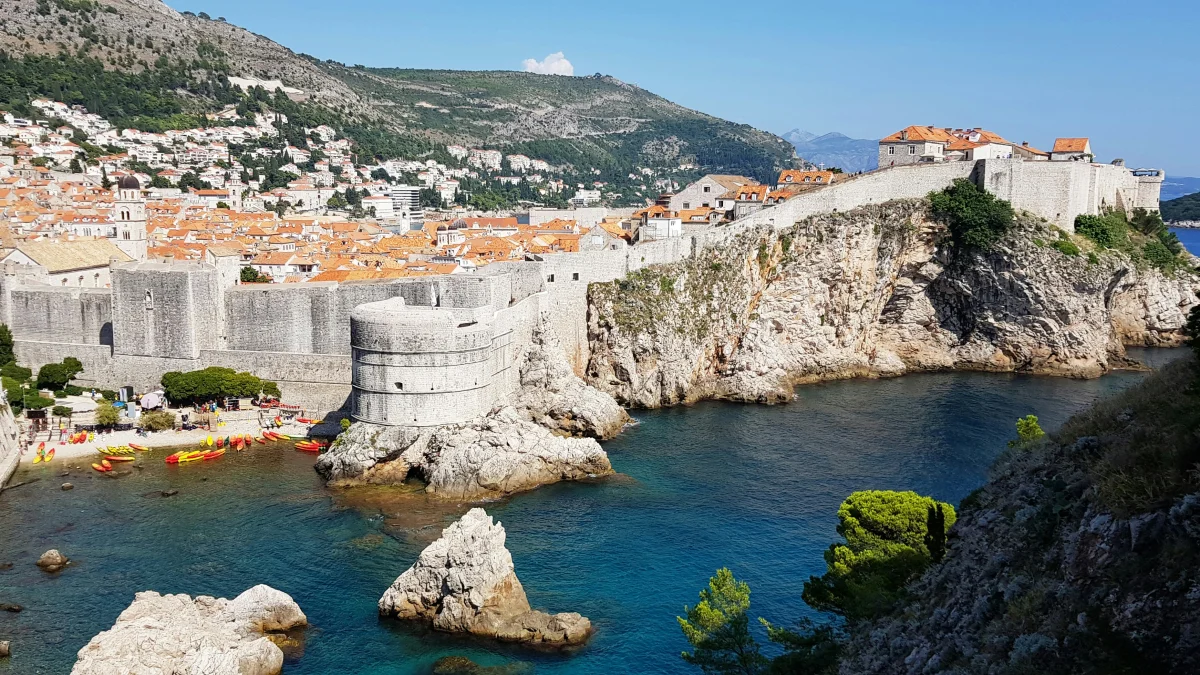
- Overtourism fatigue: Croatia's Dalmatian coast — especially Dubrovnik and Split — has become a cautionary tale of cruise-ship density and summer accommodation spikes. BBC Travel reported in April 2026 that a room in Albania can cost well below comparable nights in Croatia, while still delivering coastline, old towns and long evening meals outdoors. Day-trippers still flood Dubrovnik's walls in July; a bus south or east often buys quieter evenings and lower restaurant bills.
- Value for money: Independent travel guides consistently rank Albania, Bosnia and Serbia among Europe's cheapest destinations, with comfortable backpacking budgets of roughly €25–40 per day and mid-range trips still well below Western European averages. A two-course dinner with wine in Sarajevo or Tirana can land near €10–15; comparable meals in Dubrovnik or Venice routinely triple that in peak season.
- Easier movement: Bulgaria and Romania joined the Schengen zone in 2025, and Bulgaria's euro adoption in 2026 simplifies cross-border planning for many EU visitors. Regional buses connect major cities for €10–25 per leg; Tirana–Sarajevo, Sarajevo–Mostar and Skopje–Ohrid routes run daily in summer.
- Heat without the premium: While Greece, Spain and Italy draw surging summer demand, southeastern Europe's inland and coastal Balkans offer warm summers with slightly more manageable peak temperatures in some lake and mountain towns — useful when Mediterranean heatwaves push daytime highs above 35°C (95°F) farther south.
- Culture density: Ottoman bazaars, Byzantine churches, Austro-Hungarian boulevards and communist-era architecture sit within walking distance in cities like Sarajevo and Skopje — a layered history that would require multiple countries farther west.
Balkans vs Western Europe: what your budget buys
Exact costs shift with season and booking channel, but 2026 travel guides converge on a useful rule of thumb: a comfortable Balkans backpacking day often costs half to two-thirds of a comparable day in Croatia or Italy, and roughly 40–60% of Western European capital-city averages once accommodation is included.
- Hostel dorm: €11–18 in Tirana or Sarajevo vs €25–35 in Dubrovnik or Rome in summer
- Mid-range hotel: €45–80 in Ohrid or Kotor shoulder season vs €120–180 on Croatia's busiest islands in August
- Intercity bus (3–5 hours): €10–20 across Albania, Bosnia, North Macedonia; trains are patchier but improving in Bulgaria
- Restaurant main course: €6–10 in Bosnia; €8–14 in Albania; €15–25 in Montenegro's premium coastal strips
- Beer or coffee: €1.50–2.50 in many Bosnian and Albanian cafés vs €4–6 in tourist-core Western European squares
The trade-off is infrastructure: highways are narrower, English varies outside capitals, and peak-season coastal parking in Montenegro can test patience. For travellers who prioritise atmosphere and value over seamless logistics, that exchange usually works.
Five Balkans destinations — and what the weather holds
These five stops form a logical summer loop — Adriatic to lake to capital — with manageable bus links and sharply different microclimates. Check each city's live outlook before you commit; the summaries below reflect long-term June–September norms, not a single forecast week.
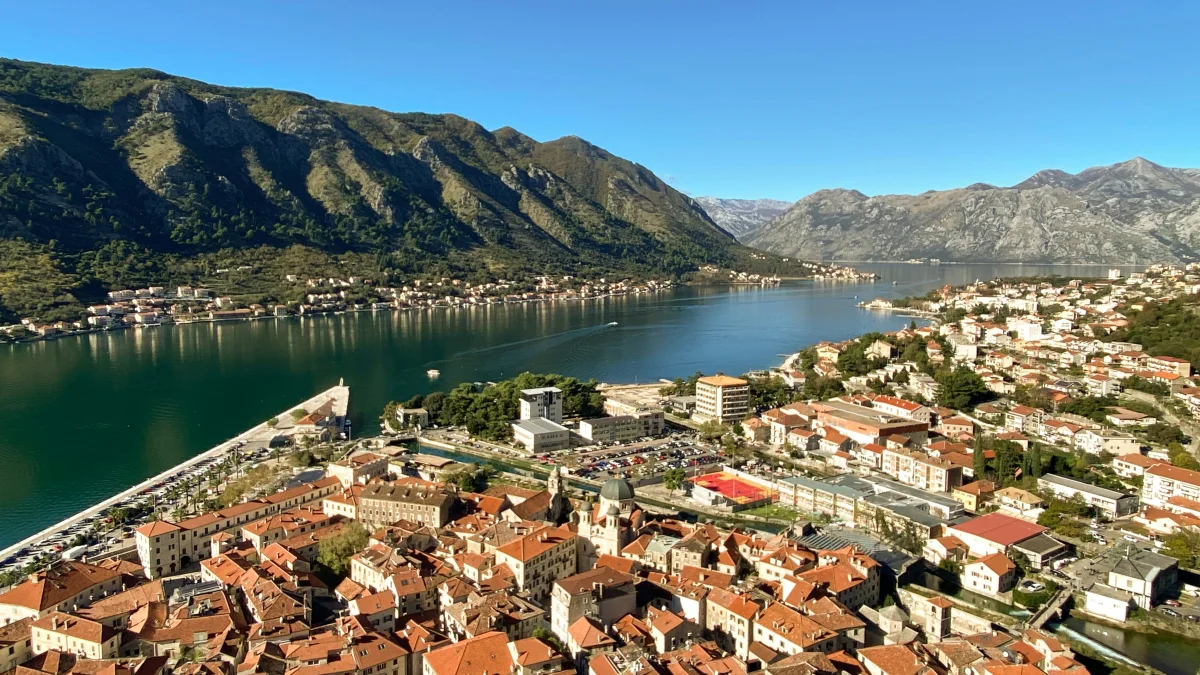
Kotor, Montenegro
Walled Kotor sits at the head of a dramatic Adriatic inlet often compared to a Norwegian fjord — medieval streets, mountain backdrops and waterfront cafés at prices that still undercut Dubrovnik across the border. Euronews Travel highlighted Kotor in May 2026 after fintech firm Zable ranked it among Europe's best-value summer destinations, citing average flights near €91 and relatively low tourist taxes.
The old town is compact enough to explore in a day, but the region rewards longer stays: Perast's baroque waterfront, boat trips to Our Lady of the Rocks, and the serpentine road to Lovćen National Park deliver the "mini fjord" experience without a car if you book tours locally. Hiking the fortress walls above the town is essential — start before 09:00 in July to avoid heat and queueing.
June through September typically brings daytime highs of 24–30°C (75–86°F), low rainfall and long sunshine hours — ideal for swimming in the bay or day trips to quieter Perast. July and August push accommodation prices up sharply along the Montenegrin coast; May–June and September offer thinner crowds and easier parking in the old town. Sea temperatures often reach 23–26°C (73–79°F) by late July — warm enough for long swims without the stifling midday heat of southern Italy.
Watch for: cruise-ship days when the old town swells before 14:00; Budva's beach-party strip 30 km (19 miles) away if you want nightlife; narrow coastal roads on Bay of Kotor drives.
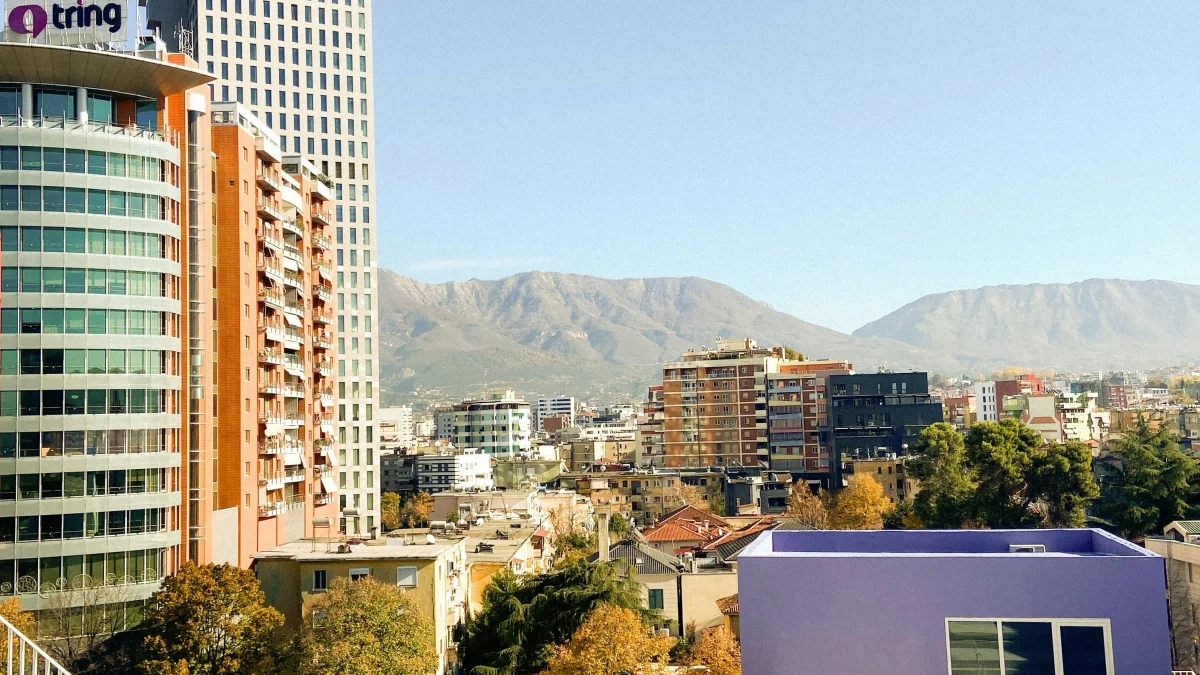
Tirana and the Albanian Riviera
Tirana has transformed from a closed capital into one of Europe's most talked-about city breaks — colourful architecture, a booming café scene and gateway access to Berat, Gjirokastër and the Ionian coast. Travel writers consistently rank Albania as the cheapest country in the Balkans, with hostel beds from roughly €11 and intercity buses under €15.
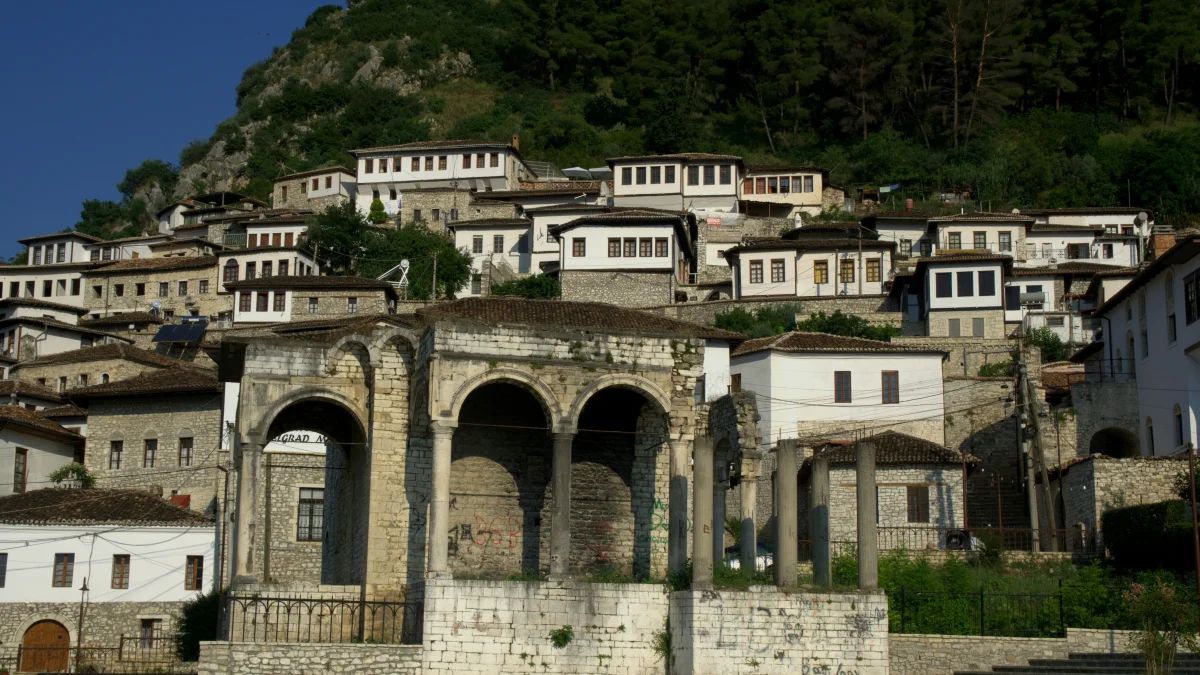
Two or three days in Tirana covers the Blloku district's restaurants, Bunk'Art's Cold War tunnels, and the cable car to Dajti Mountain for sunset views over the city. From there, Berat and Gjirokastër — both UNESCO-listed Ottoman towns — fit on overnight or day-trip loops; Berat's hillside quarter is especially photogenic at golden hour.
Summer along the Albanian Riviera — Dhërmi, Himara and Ksamil — runs hot and dry: expect highs of 28–33°C (82–91°F) in July and August, with sandy beaches that contrast with the rocky coves of northern Adriatic neighbours. Ksamil's turquoise shallows near the Greek border draw the most international visitors; Dhërmi and Himara stay slightly quieter. Inland UNESCO towns run a few degrees warmer in the afternoon but cool more at night.
Best strategy: base in Tirana for culture, then head south for beach days; avoid peak August if you want the quietest coves. The Llogara Pass drive — where mountains drop to the Ionian Sea — is one of the region's great scenic roads; go on a clear morning when visibility extends to Corfu.
Watch for: limited rail network (buses are king); cash still useful in smaller guesthouses; Riviera road parking in August.
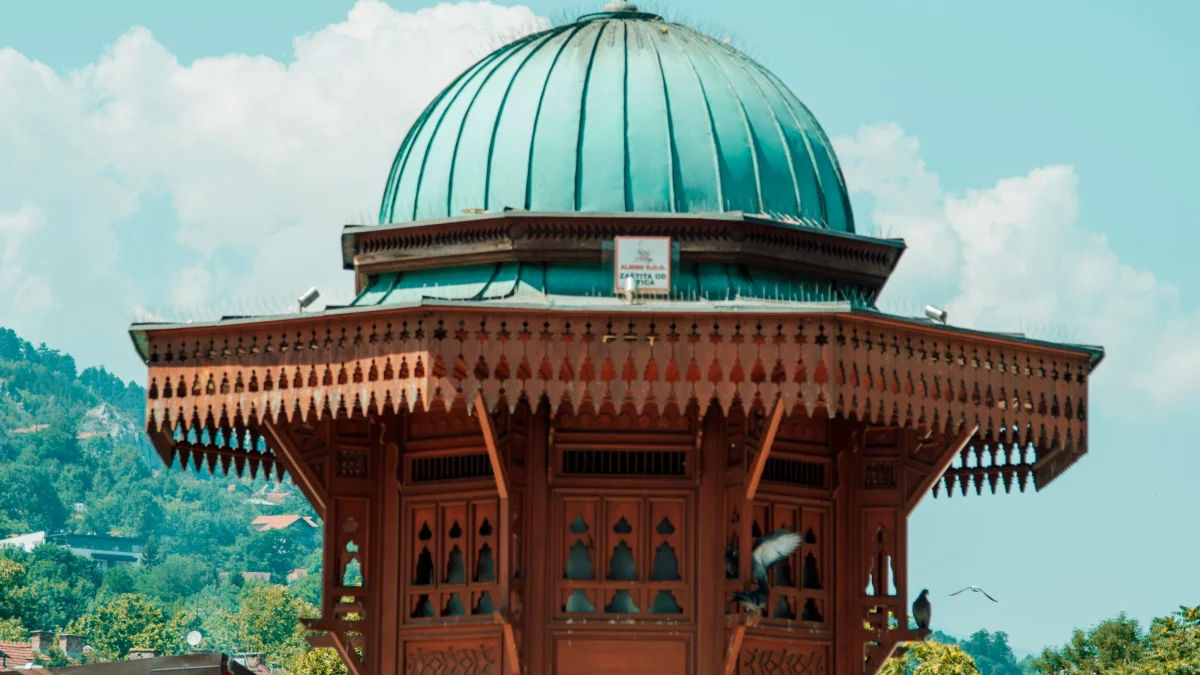
Sarajevo and Mostar, Bosnia and Herzegovina
Sarajevo rewards travellers who want layered history without Western European price tags. The capital blends Austro-Hungarian boulevards with Ottoman Baščaršija bazaar lanes; day trips to Mostar's Stari Most and Blagaj's riverside tekke are manageable by bus. Meal costs here remain among the lowest in the region — local restaurants often serve hearty plates for €6–8.
Allow at least two nights in Sarajevo: one day for the old town, Latin Bridge and war-history museums (presented with increasing nuance), another for the Tunnel of Hope or a cable-car ascent toward Trebević for city views. Bosnian coffee culture — thick, slow and social — is an attraction in itself; budget an hour per cup in a Baščaršija courtyard.
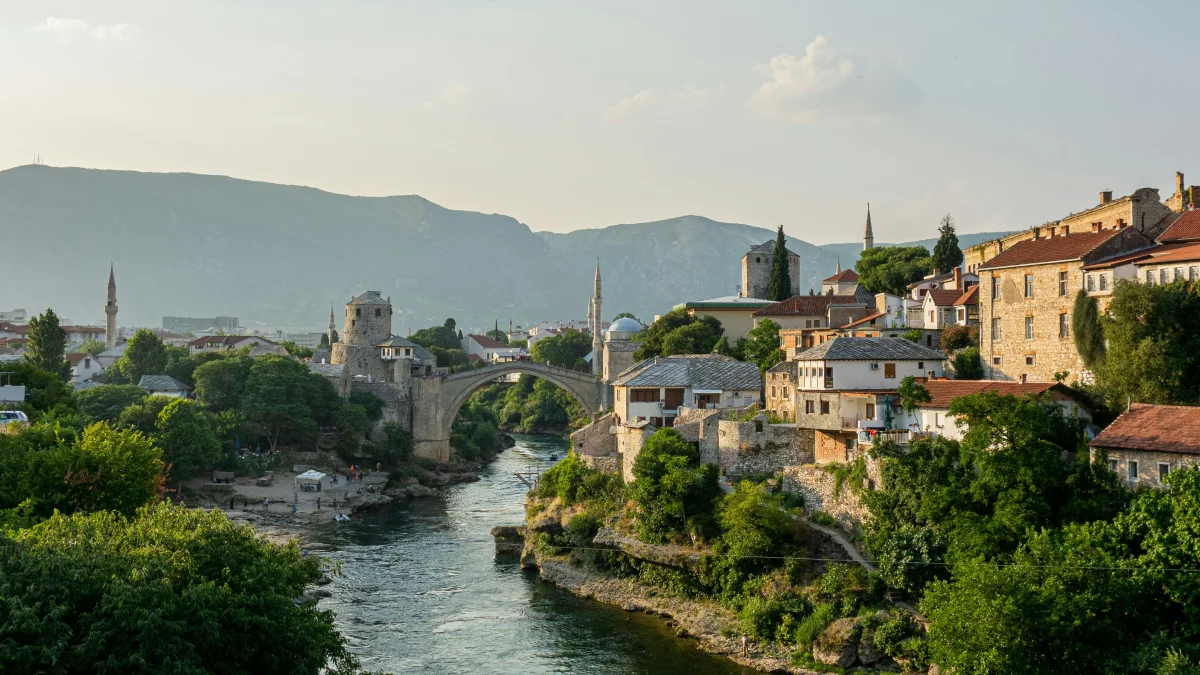
Mostar, roughly 2 hours southwest by bus, centres on the rebuilt Stari Most arching over the Neretva — divers still leap from it in summer, and the old town's cobbled lanes stay lively until late. Combine with Blagaj (15 km / 9 miles away), where a Dervish house sits at the base of a cliff spring. Both towns run hotter than Sarajevo in the afternoon but cool quickly along the river.
Sarajevo's valley location moderates extremes: summer highs usually sit in the mid-20s °C (mid-70s to low 80s °F), cooler than coastal Montenegro and easier for all-day walking. Afternoon thunderstorms are possible in late summer, but June and early September combine warm days with fewer tour groups than July.
Watch for: occasional heavy rain bursts in August; winding Neretva valley roads if driving; respectful conduct at religious sites in Mostar and Blagaj.
Ohrid, North Macedonia
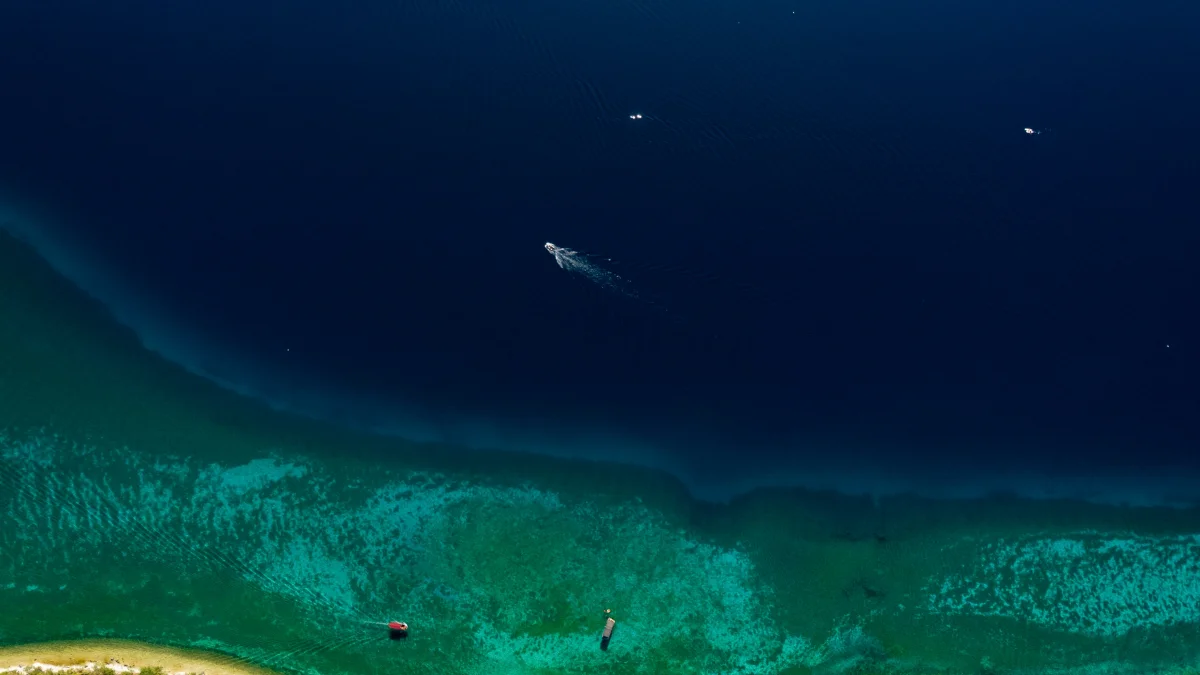
Lakeside Ohrid is one of the Balkans' most complete small-town experiences — Byzantine churches, cobbled lanes and clear water backed by the Galičica range. UNESCO status has raised awareness without yet delivering Dubrovnik-level crowds; boutique stays still often fall in the €60–100 per night range cited by 2026 travel guides for underrated Balkan destinations.
The town wraps around the lake's eastern shore: Kaneo church on its cliff, Samuel's Fortress for panoramic views, and a string of family-run restaurants serving Ohrid trout and local white wine. Boat trips to the monastery of St Naum at the lake's southern end reveal springs and birdlife; the border with Albania crosses the water nearby.
Galičica National Park rises directly behind town — day hikes to Magaro peak (roughly 2,255 metres / 7,400 ft) straddle Macedonia and Albania with views over both Lake Ohrid and Lake Prespa. Start early; summer afternoons above the tree line can push 30°C (86°F) even when the lakeshore feels breezier.
Summer brings warm, dry days with highs around 27–31°C (81–88°F) — hot enough for swimming but generally less punishing than Athens or Rome during heatwave weeks. Evenings cool pleasantly over the lake. Late May and June offer wildflowers on nearby trails before peak-season heat and festival traffic build in July.
Watch for: Ohrid Summer Festival crowds in July–August; narrow old-town lanes with limited parking; occasional algae blooms in very hot, still weeks (check local advisories).
Sofia, Bulgaria
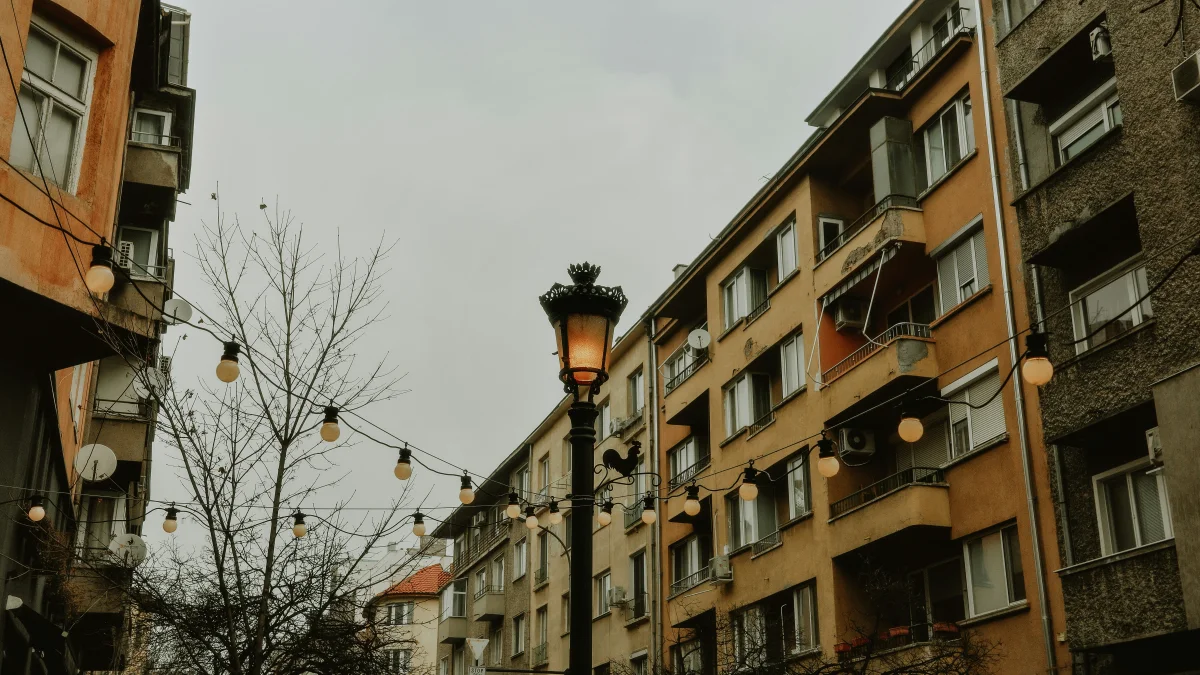
Sofia anchors the eastern Balkans as an affordable capital with Roman ruins, Orthodox domes and a food scene that punches above its price point. Vitosha Mountain rises within city limits for day hikes; Plovdiv's Roman theatre lies roughly 150 km (93 miles) away by bus or train. Bulgaria's Schengen and euro transitions in 2025–2026 make multi-country Balkans loops simpler for many EU passport holders.
Sofia rewards walkers: Alexander Nevsky Cathedral, the Roman Serdica ruins beneath modern boulevards, and the yellow-brick boulevard linking government buildings to parkland. The city's craft-beer and natural-wine bars have expanded rapidly — evenings in the Studentski Grad or central Largo area feel genuinely European at half the price of Vienna or Munich.
Vitosha is reachable by public transport and cable car: marked trails from Aleko hut suit half-day hikes; winter ski season on Vitosha is modest but real. Plovdiv — European Capital of Culture 2019 — makes an easy overnight with its restored Old Town and amphitheatre; buses run frequently from Sofia's central station.
Sofia's continental climate runs slightly cooler than the Adriatic coast: expect June highs near 26°C (79°F), July–August afternoons in the high 20s to low 30s °C (mid-80s to low 90s °F), and occasional thunderstorms that clear quickly. If coastal heat above 32°C (90°F) is a concern, Sofia and Ohrid offer a useful inland-lake counterweight on the same itinerary.
Watch for: winter smog in Sofia (less relevant for summer trips); taxi apps vs street hail pricing; Cyrillic signage — offline maps help.
Sample two-week Balkans loop
This clockwise route minimises backtracking and mixes coast, history and cooler inland days. Adjust nights to taste; buses listed are representative summer frequencies.
Total overland distance is roughly 1,200–1,500 km (750–930 miles) depending on Riviera detours — manageable entirely by bus if you prefer not to drive mountain passes.
Month-by-month weather snapshot
These ranges summarise typical conditions across the five destinations; coastal spots run warmer than valley cities.
- May: 18–24°C (64–75°F) days inland; sea still cool for swimming but ideal for hiking and sightseeing. Lowest accommodation prices before school holidays.
- June: 22–28°C (72–82°F); Adriatic and lake water warming. Long daylight — sunset after 20:30 in much of the region. Strong month for Ohrid and Sarajevo.
- July–August: Peak heat and crowds. Coastal highs 28–33°C (82–91°F); inland capitals mid-20s to low 30s °C (mid-70s to low 90s °F). Book Adriatic beds early; inland cities offer relief.
- September: Often the sweet spot — warm water, thinning crowds, 22–27°C (72–81°F) in many towns. Montenegro and Albania Riviera still swimmable; festival season winds down in Ohrid.
When to go: shoulder season vs peak summer
The Balkans reward timing. Peak season along the Adriatic — especially Montenegro's Kotor–Budva corridor and Croatia's coast — runs June through August, when prices and cruise-ship day trippers peak. Travel guides consistently recommend May–June and September for the best balance of weather, value and crowd levels: temperatures in the low to mid-20s °C (around 70–77°F) in many inland towns, snow-free mountain trails by late May, and accommodation often 20–30% below July rates.
July and August still work if you plan around heat: swim in the afternoon, sightsee early, and mix coast with cooler inland stops. Wildfire risk is lower than in much of southern Greece or Portugal, but heat-stress days above 33°C (91°F) are increasingly common across the wider region during European summer heatwaves — another reason to keep Sofia or Ohrid in the same itinerary as Kotor or the Riviera.
Practical planning tips
- Mix countries for value: Albania plus Bosnia plus inland Montenegro delivers strong scenery-to-cost ratios; spending every night on the Montenegrin coast in August is the fastest way to erode savings.
- Use buses strategically: FlixBus and regional operators connect Tirana, Sarajevo, Skopje and Sofia affordably; a rental car helps for Lake Skadar, Llogara Pass and mountain villages but is not essential for a first loop.
- Carry cash: Smaller towns and family guesthouses often prefer euros or local currency; card acceptance is improving in capitals but not universal in rural stops.
- Book heat into your day: Ottoman old towns and fortress climbs demand morning starts; reserve midday for cafés, hammams or lake swims.
- Check border rules: Not every Balkans country is in Schengen — verify entry requirements if you are looping through Kosovo, Serbia or North Macedonia on a non-EU passport.
- Pack layers: Adriatic evenings can be breezy; mountain hikes above 1,500 metres (4,900 ft) need a wind layer even in July.
- Learn five phrases: English works in youth hostels and tour desks; a little Albanian, Bosnian or Macedonian opens doors in family restaurants.
Check conditions before you fly
Smaller-city trends tell you where the crowd is heading next; forecasts tell you what to pack. Compare live outlooks for Kotor, Tirana, Sarajevo, Ohrid and Sofia on SatMeteo, and use the live temperature map to see how summer heat is building across southeastern Europe before you lock in dates — especially if you are weighing a Balkans loop against a busier Southern Europe itinerary.