




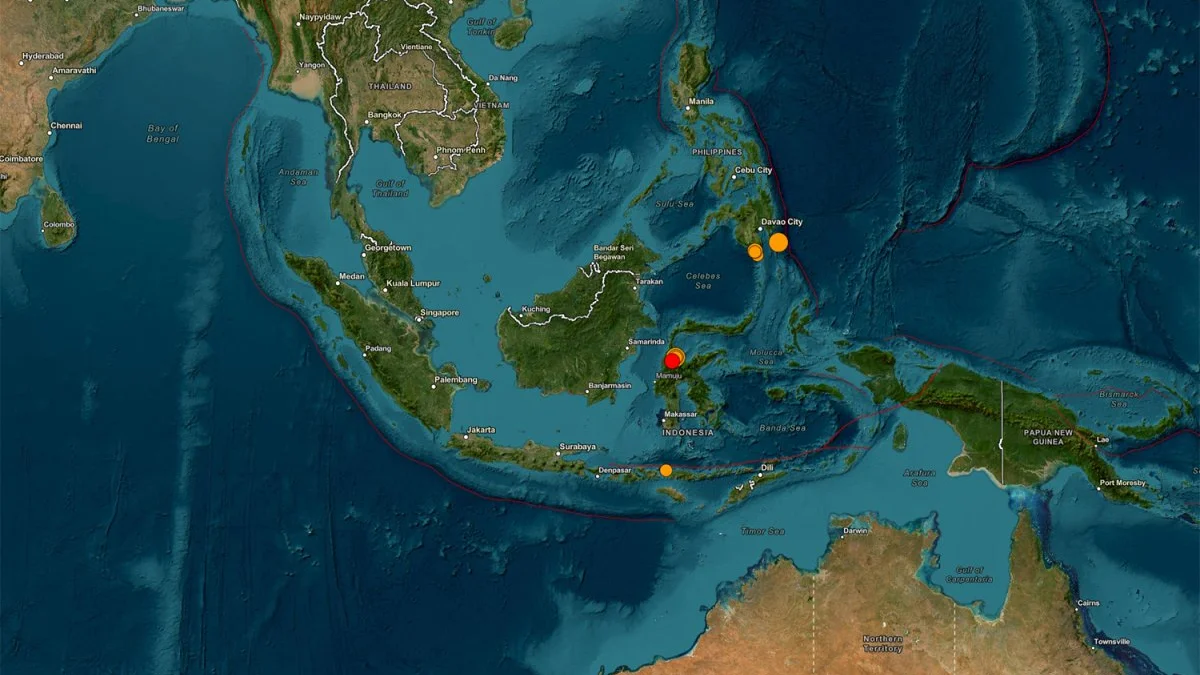
A magnitude 6.7 earthquake shook central Indonesia's Sulawesi island on Tuesday, 16 June 2026, killing at least one person, injuring dozens and damaging homes and infrastructure across a region still haunted by a devastating quake and tsunami eight years ago. The U.S. Geological Survey said the shallow tremor struck at 10:27 a.m. local time, centred about 43 km (27 miles) east-southeast of Palu at a depth of roughly 10 km (6 miles).
Palu shaken, hospitals evacuated
The initial quake sent strong shaking through Palu — a city of about 400,000 people and the capital of Central Sulawesi province — lasting more than a minute. Residents fled into open areas as roofs rattled, walls cracked and debris spread across streets. Several hospitals evacuated patients outdoors as a safety measure, including some still attached to IV drips.
"We have evacuated all guests from the hotel, including several guests who remained in their rooms," said Effendi Natali, general manager of a four-star hotel in Palu. "They all panicked, which is a natural reaction during an earthquake, but everyone is safe," he added, noting the property sustained only minor damage.
Many residents also moved away from coastal areas as a precaution in case the quake set off a tsunami. Indonesia's Meteorology, Climatology and Geophysical Agency (BMKG) said there was no danger of a tsunami but warned that aftershocks could continue for hours.
Casualties and damage
By Tuesday afternoon, Indonesia's National Disaster Management Agency reported one person killed, 38 injured — including 13 with serious injuries in Sigi regency — and at least 312 people displaced. Four regencies close to the epicentre, with a combined population of about 1.3 million, had yet to be fully assessed.
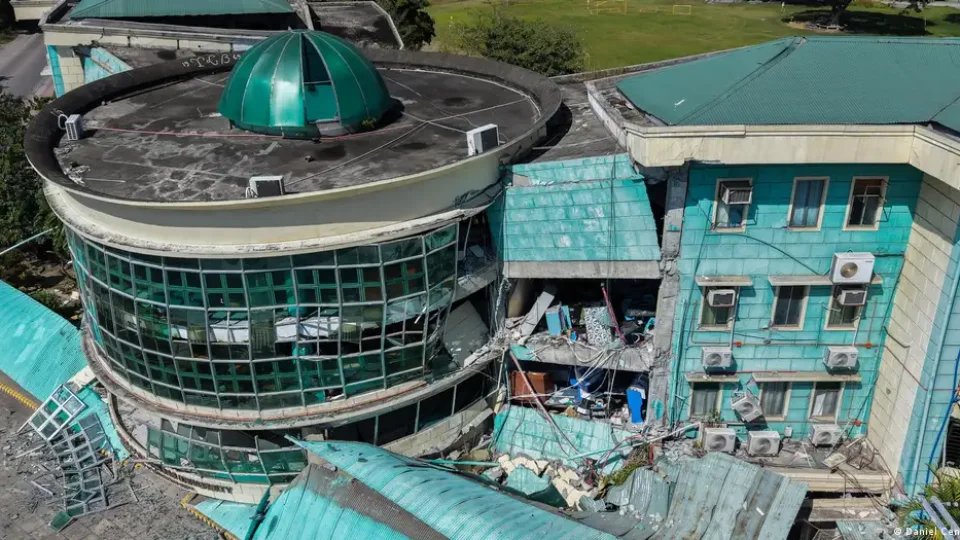
Images from the area showed heavily damaged structures with partially collapsed roofs, shattered walls and debris scattered across streets. A preliminary damage survey listed 67 houses, six places of worship, four public facilities, two bridges, two government office buildings and three business sites affected. A section of provincial road linking Palu with neighbouring regencies of Sigi and Poso was cut, complicating relief access to inland communities.
Aftershocks and 2018 trauma
BMKG recorded at least 71 aftershocks throughout the day, with the strongest measuring magnitude 5.2. Authorities urged the public to heed official advice and exercise caution, warning that aftershocks can last for hours.
"The earthquake shaking was extremely strong," said Palu resident Muhtar Ahmad. "We are still traumatized by the previous earthquake, so we chose to remain outside because we are afraid that aftershocks may continue."
Many Sulawesi residents are haunted by the magnitude 7.5 earthquake that devastated Palu in September 2018, setting off a 3-metre (10-foot) tsunami and soil liquefaction in which whole neighbourhoods were swallowed by collapsing ground. More than 4,000 people were killed. In January 2021, a magnitude 6.2 earthquake near Mamuju on western Sulawesi left at least 100 people dead, with thousands sleeping outdoors for days out of fear of aftershocks.
Same-day tremors in China and Japan
The Sulawesi quake was the strongest of three significant earthquakes reported across the Pacific Ring of Fire on Tuesday. In China's Qinghai province, a magnitude 6.3 tremor struck Haixi prefecture at 5:06 p.m. Beijing time at a depth of about 10 km (6 miles), leaving one person dead and four injured. Authorities evacuated workers from coal mines near the epicentre and continued assessing casualties and property damage; a magnitude 4.9 aftershock followed.
Japan, also earthquake-prone, recorded a magnitude 6.0 quake near the east coast of Honshu at about 7:46 p.m. local time. Tremors were felt in Tokyo and surrounding areas, with the strongest shaking reported in Gunma and Saitama prefectures north of the capital. Japan's weather agency said there was no tsunami threat and no casualties were reported.
Ring of Fire and weather outlook
Indonesia, a vast archipelago of more than 17,000 islands, sits on the Pacific "Ring of Fire" — an arc of intense seismic activity where tectonic plates collide. Earthquakes and volcanic eruptions are common across the region, and Tuesday's cluster of tremors from Sulawesi to Qinghai and Honshu underscores how quickly conditions can shift for communities forced outdoors.
As recovery teams assess damage and aftershocks continue, residents and aid workers will need reliable local forecasts. Check hourly conditions for Palu, Jakarta, Xining and Tokyo on SatMeteo as the situation develops.