


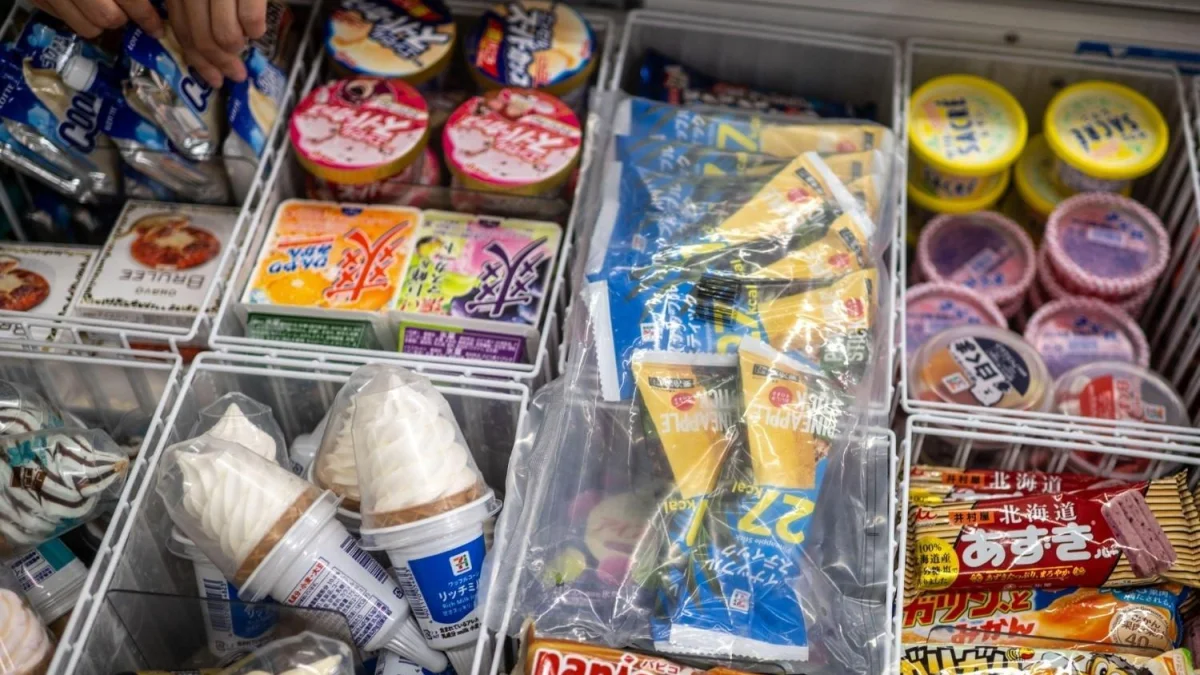
Japan's competition watchdog raided six of the country's largest ice-cream makers on 16 June 2026, investigating suspected collusion to raise prices just as another punishing summer approaches. Officials from the Japan Fair Trade Commission (JFTC) searched corporate headquarters of Akagi Nyugyo, Ezaki Glico, Lotte, Meiji, Morinaga Milk Industry and Morinaga & Co. — the first time the commission has opened a suspected price cartel case in the ice-cream sector.
The timing has sharpened public frustration. Japan's market for ice cream and frozen snacks hit a record ¥663 billion (~$4 billion) in the fiscal year to March, buoyed by increasingly hot summers and steady price rises. With the Japan Meteorological Agency (JMA) forecasting above-normal temperatures nationwide from June through August, frozen desserts are moving from indulgence to heat relief — making any alleged price coordination a sensitive issue for households already bracing for extreme weather.
What regulators allege
According to reports citing sources familiar with the investigation, senior executives at the six firms are suspected of holding meetings and exchanging emails over several years to coordinate the timing and scale of retail price increases for ice cream and other frozen desserts. The JFTC is also examining whether the companies used broader food inflation — linked in part to Russia's invasion of Ukraine and disruption in the Middle East — to justify price rises beyond what higher raw-material costs would warrant.
Public broadcaster NHK reported that the firms improperly raised prices of popular desserts several times by 5–10% over the years, citing anonymous sources. NHK's main evening bulletin illustrated the allegation with a graph showing flagship products — Meiji ice cream and Morinaga Milk's six-pack choco-ice bites — jumping in lockstep on four occasions between June 2022 and September 2025.
The Asahi Shimbun reported that the companies, for example, set wholesale prices that would raise suggested retail prices by around ¥10 to ¥20 ($0.06 to $0.12) per product, with supermarkets and convenience stores likely passing the higher costs to consumers. The pricing arrangement is said to have covered most products from the six firms, excluding commercial-use and premium lines.
The JFTC declined to issue a public statement on the raids. All six companies have confirmed they are under investigation and say they are cooperating fully. Morinaga Milk said on its website that it was "subject to an on-site inspection by the Japan Fair Trade Commission on suspicion of violating the Antimonopoly Act" and that it takes the matter "very seriously."
The six firms and a concentrated market
Four of the raided companies — Meiji, Morinaga Milk Industry, Lotte and Morinaga & Co. — are headquartered in Tokyo. Ezaki Glico, best known globally for Pocky biscuit sticks, is based in Osaka. Akagi Nyugyo operates from Fukaya in Saitama Prefecture, north of the capital. Together they dominate shelf space in convenience stores and supermarkets across Japan, distributing frozen desserts wholesale to retailers nationwide.
Sources cited by Kyodo News said this marks the first JFTC investigation into a suspected ice-cream-related price cartel. A distant precedent exists: in 1997, the commission found Haagen-Dazs Japan in violation of the antimonopoly law for pressuring retailers not to discount products below suggested retail prices.
Heat, climate and surging demand
Japan's summers are already among the most humid and punishing in the developed world — and record heat is making them harder to endure. Summer 2025 was the hottest since nationwide records began in 1898, with average temperatures 2.36°C (4.2°F) above normal. Temperatures topped 40°C (104°F) on nine days between June and August; on 5 August, Isesaki in Gunma Prefecture logged 41.8°C (107°F), a new national high.
In April 2026, the JMA formally adopted kokushobi — literally "cruelly hot day" — as the official term for days when the mercury reaches 40°C (104°F) or above. The label won a public poll with more than 202,000 votes, filling a gap below existing terms for summer days at 25°C (77°F), midsummer days at 30°C (86°F) and extremely hot days (mōshobi) at 35°C (95°F). Scientists and meteorologists link the intensifying heat to climate change, including warming waters around the Japanese archipelago that keep temperatures elevated well into autumn.
For ice-cream makers, hotter summers have historically meant stronger sales — even as ingredient and energy costs climb. The alleged cartel investigation lands at the intersection of that demand surge and consumer anger over living costs, with Tokyo and Osaka among the urban centres where convenience-store freezers are a familiar refuge from sticky afternoon heat.
What it means for consumers
The JFTC plans to analyse seized documents and interview relevant parties to determine the full extent of any alleged coordination. No penalties have been announced; on-site inspections are an early step in Japanese antitrust probes. If violations are confirmed, companies can face cease-and-desist orders and fines under the Antimonopoly Act.
For shoppers, suggested retail prices set at the wholesale level flow through to supermarket and convenience-store tags. With another above-normal summer forecast and the new kokushobi warnings entering weather bulletins, households in cities such as Isesaki — site of Japan's record 41.8°C (107°F) reading — may watch both the thermometer and the freezer aisle more closely than usual.