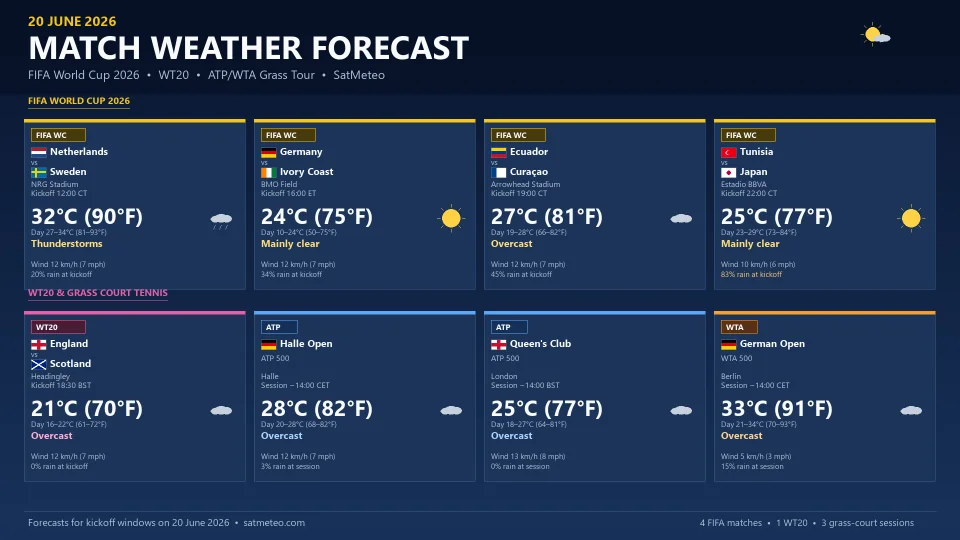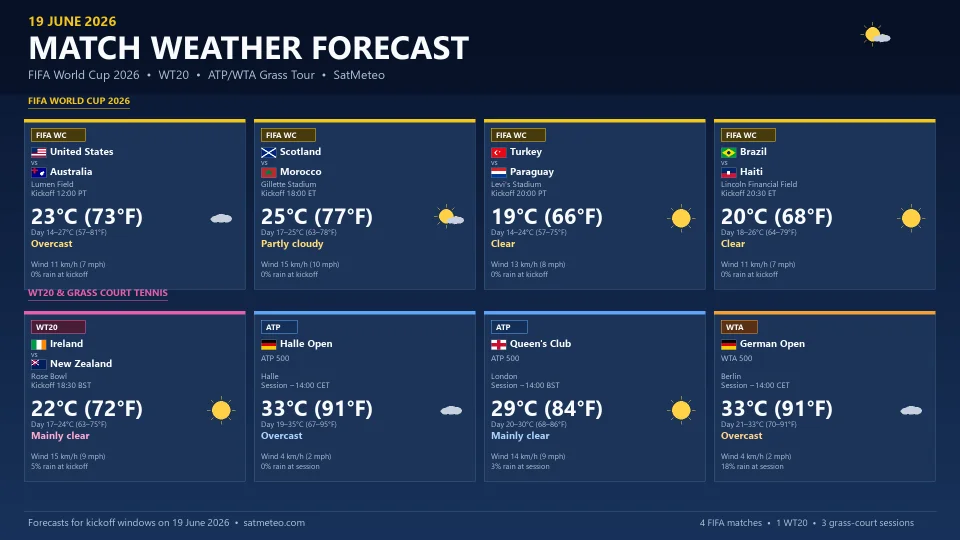





Weather is emerging as a central challenge for the FIFA World Cup 2026 across Canada, the United States, and Mexico. Climate researchers, players' unions, and meteorologists warn that extreme heat, strict Wet Bulb Globe Temperature (WBGT) thresholds, severe thunderstorms, and evolving fan policies could shape how matches are played, delayed, and experienced in stadiums during the North American summer.
Heat warnings and WBGT safety limits
World Weather Attribution, a network of climate scientists, estimates that roughly 26 of 104 matches could be played in conditions where WBGT reaches at least 26°C (79°F) — a level linked to elevated heat-stress risk. Five games are expected to reach 28°C (82°F) WBGT or higher. In a hotter-than-average summer, research indicates that 14 of 16 host stadiums could breach the 28°C (82°F) threshold that FIFPRO recommends as a critical safety limit, with as many as four venues potentially approaching 32°C (90°F).
Al Jazeera weather presenter Everton Fox said around half a dozen venues are prone to extreme heat, including Dallas, Houston, Miami, and Mexican host cities, with daytime temperatures expected to average around 28°C (82°F). In southern parts of the United States and northern Mexico, readings can climb as high as 40°C (104°F). Historical data from local National Weather Service offices, dating back to 1920, shows frequent 32°C (90°F) days across several host cities during the tournament window.
Only three stadiums — AT&T Stadium in Dallas, NRG Stadium in Houston, and Mercedes-Benz Stadium in Atlanta — have air conditioning. Of the 26 matches projected to reach at least 26°C (79°F) WBGT, 17 will be played in stadiums with cooling systems. More than a third of games with a one-in-ten chance of exceeding 26°C (79°F) WBGT will be held at venues without air conditioning, including Hard Rock Stadium in Miami, Estadio BBVA in Monterrey, Lincoln Financial Field in Philadelphia, Arrowhead Stadium in Kansas City, Gillette Stadium near Boston, and MetLife Stadium in the New York area.
How heat affects players — and mixed messages
Photographs of European players training shirtless on pitches, dousing themselves with water, and wearing ice collars — including Norway's team during a friendly against Morocco — have fuelled public concern. Fox noted that humidity, solar radiation, and wind speed make it harder for sweat to evaporate, reducing the body's ability to cool itself during 90 minutes of intense effort.
Physical performance coach Raiyan Abbasi, who has worked with Swansea, West Ham, and the Pakistan national side, said excessive sweating in heat can lead to dehydration, cramps, and increased fatigue. Researchers at the University of Sydney's Heat and Health Research Centre explained that when players overheat, blood is redirected toward the skin, reducing supply to working muscles and cutting performance levels.
Athletes from warmer climates may adjust slightly faster, Abbasi said, but structured acclimatisation and medical support can narrow that gap. England captain Harry Kane offered a contrasting view after his side beat New Zealand 1-0 in Tampa, Florida, where temperatures exceeded 30°C (86°F), insisting the heat "won't be a factor" thanks to England's training programme — a position Abbasi said was reasonable given proper preparation.
FIFA's heat measures face scientific pushback
FIFA said it has carried out heat-risk planning, including three-minute hydration breaks in each half, delayed kickoff times away from the hottest afternoon hours, cooling infrastructure for fans and players, adapted work-rest cycles, and enhanced medical readiness scaled to real-time conditions. Fox argued the hydration breaks probably need to be longer to gain full benefit, while also suggesting FIFA could have limited more fixtures to northern US venues and Canada.
More than 20 scientists, including Professor Douglas Casa of the University of Connecticut, signed an open letter stating that current precautions are insufficient and outdated. Casa said breaks should last at least five to six minutes to allow meaningful recovery; signatories described the three-minute windows as too short to have a meaningful impact. UN Climate Change executive secretary Simon Stiell warned that the risk of dangerous heat has roughly doubled since the 1994 World Cup on the same continent.
FIFA's emergency preparedness team meets regularly with national meteorological and emergency authorities across all three host nations and 16 host cities. The governing body said it will monitor conditions in real time by integrating WBGT and Heat Index surveillance and is ready to apply contingency protocols should extreme weather occur.
Reversed water-bottle policy for fans
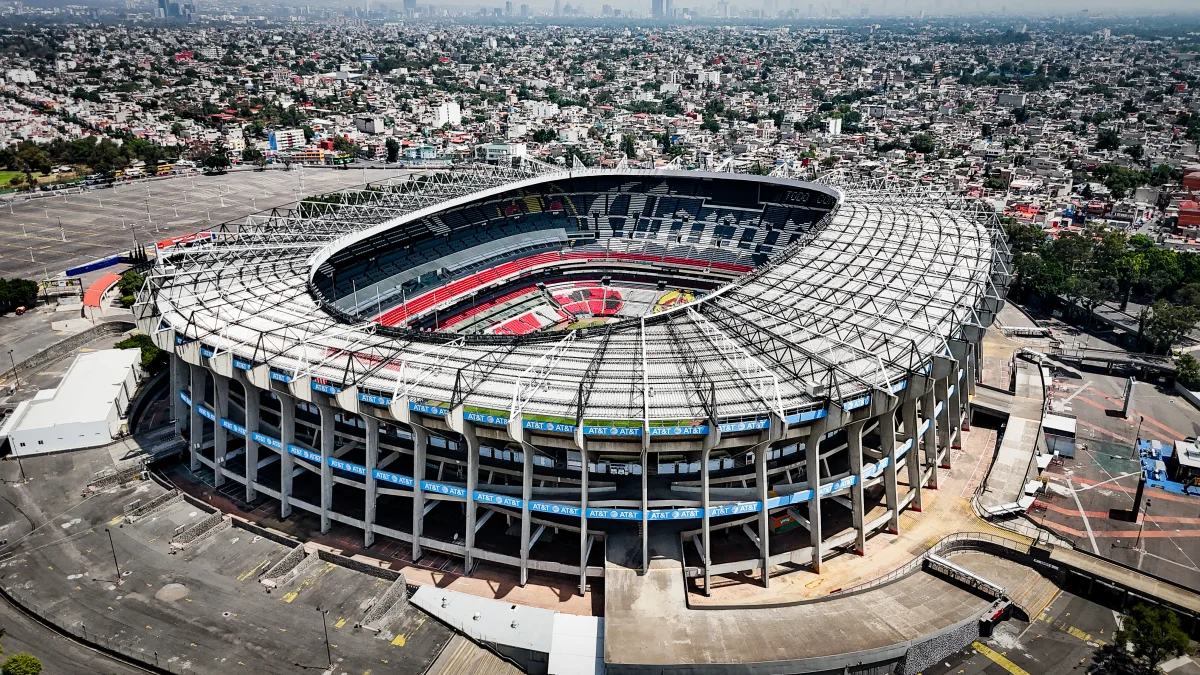
FIFA initially banned fans from bringing water bottles into stadiums, citing a wish to standardise rules already in place at several venues. Following backlash, it reversed the decision within a day, allowing spectators to bring one small, factory-sealed disposable water bottle into stadiums across the United States and Canada. FIFA has not yet confirmed whether the change will extend to Mexico venues, including Estadio Azteca in Mexico City, as host cities enter their hottest stretch of the year and only a few venues feature roofs.
Thunderstorm delays with no FIFA cut-off
Severe weather poses a separate threat. Under US thunderstorm protocol, a fixture must be suspended immediately if lightning or electrical discharge is detected within an eight-mile radius of the stadium. Players are led off the pitch and fans evacuated to safe areas. A 30-minute countdown begins after a strike; the clock resets to zero if another strike occurs before it expires, and can continue resetting until 30 minutes pass without a detected strike.
FIFA cannot override local lightning rules and has no specific regulation setting how long a delay must last before a match is called off, assessing each case individually — a gap that could create scheduling problems, including during knockout rounds. Last summer's Club World Cup in the United States offered a precedent: Chelsea's round-of-16 tie against Benfica in Charlotte lasted four hours and 38 minutes after FIFA described "severe weather in the area," with the delay lasting around two hours. Then-Chelsea head coach Enzo Maresca called the situation a "joke."
Track World Cup 2026 weather on SatMeteo
From WBGT thresholds and hydration rules to lightning holds and fan entry policies, match-day conditions will matter at every venue. Check hourly forecasts and stadium outlooks on SatMeteo before kickoff, and use the live temperature map to see how heat builds across North American host regions in real time.