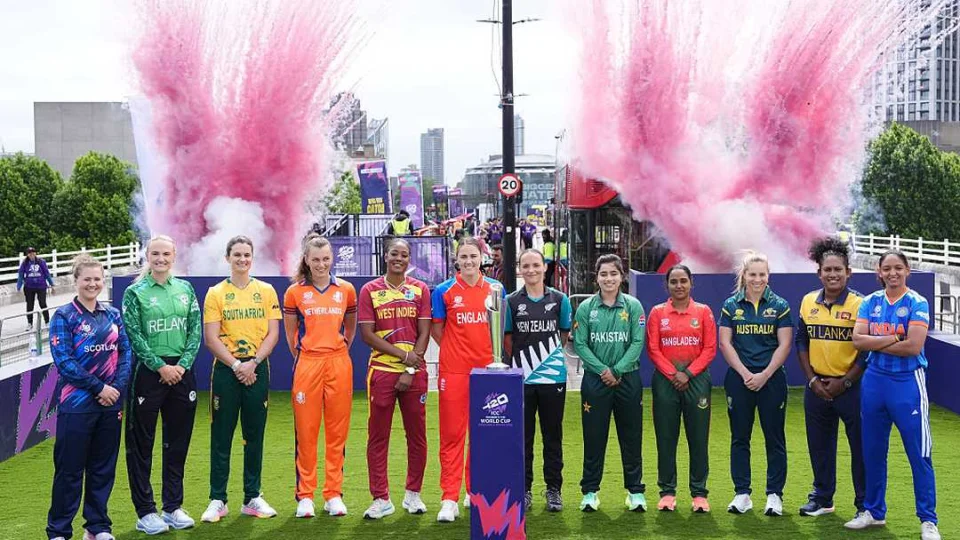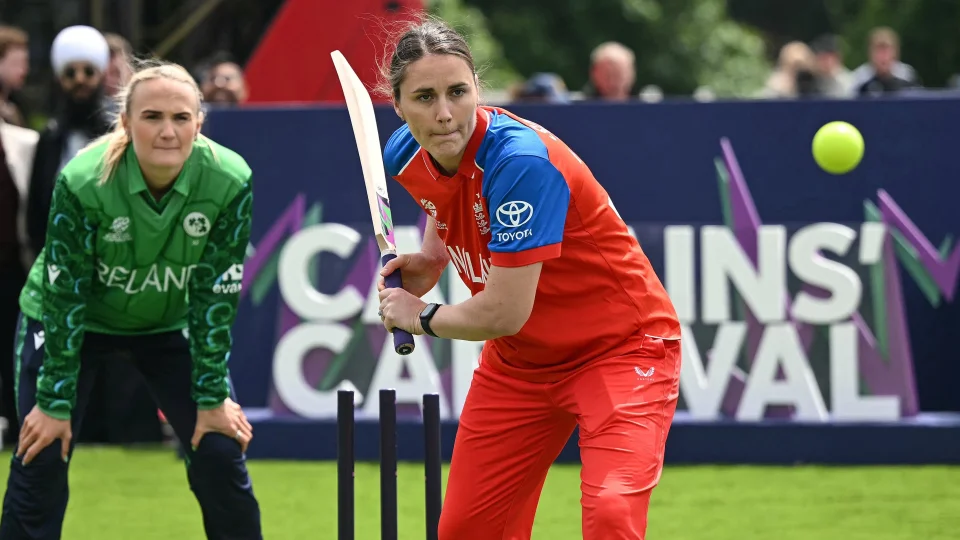





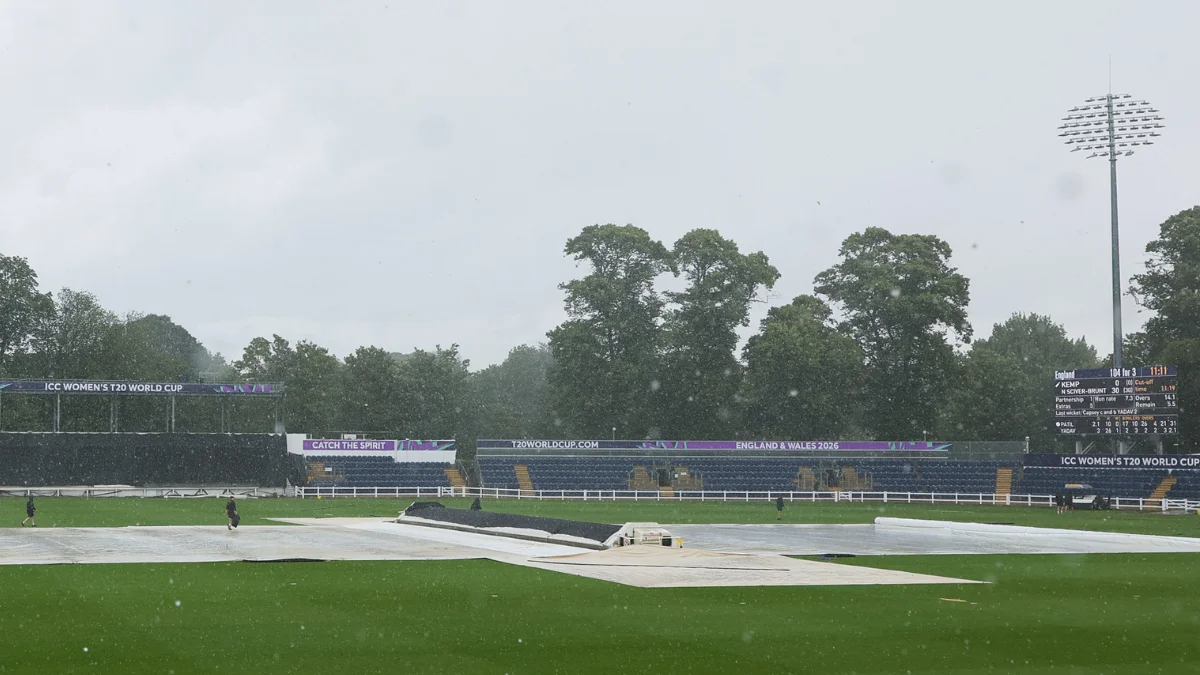
Weather is already shaping the ICC Women's T20 World Cup 2026 before the group stage begins. Heavy rain halted the England versus India warm-up at Sophia Gardens in Cardiff on 10 June, with England on 104 for 3 after 14.1 overs when umpires brought the covers on. The tournament proper opens on 12 June across seven English venues through 5 July — and in a British summer, rain, DLS recalculations and outfield drying time are as much part of the forecast as temperature or wind.
Cardiff warm-up: how the rain unfolded
The final warm-up fixture in Wales turned into a case study in English summer cricket weather. After India won the toss and chose to field on a dry, hard surface, England built momentum through a 70-run stand between Amy Jones and Nat Sciver-Brunt before Indian spinners pulled the innings back. At 14.1 overs, with Nat Sciver-Brunt unbeaten on 29 and the score 104 for 3, a heavy drizzle forced the umpires together at 10:59 local time and groundstaff rolled hover covers onto the square.
The break was brief — rain intensified by 11:06 and additional covers were laid across the outfield while the entire square sat protected. Air temperatures hovered around a cool 16°C (61°F) under steady rain, with precipitation probability for the Cardiff area already high through the morning. Forecasts pointed to an 87 % chance of rain across the day, easing only briefly around mid-afternoon before another shower band potentially returning later in the day.
Without a long enough dry window to drain a saturated outfield, a complete washout remained a live risk. Play did eventually resume, but the delay underscored how quickly a June front can stop a T20 fixture even when the pitch itself is covered within minutes.
UK outlook heading into the opening week
The Met Office describes early to mid-June 2026 as unsettled and showery for much of the United Kingdom, with blustery showers and a chance of thunder in northern and eastern areas before conditions gradually improve. Through the week of 10 June, temperatures stay slightly below the seasonal average and can feel cool between showers, even when strong June sunshine breaks through in sheltered spells.
From the weekend of 12–14 June, forecasters expect high pressure to build from the south, bringing a drier and warmer trend — potentially into the high 20s °C (high 80s °F) in some locations — that may persist into the following week. That transition matters for the England vs Sri Lanka opener opener at Edgbaston on Friday 12 June (18:30 BST), which falls on the boundary between the showery pattern and the settling spell. Morning inspections and any overnight rain in the Midlands will be critical.
Even in a improving pattern, English summer rarely delivers uninterrupted sunshine. Slow-moving showers from unstable air masses can still clip western and northern venues with little warning, while south-eastern grounds may see longer dry windows but also heavy downpours when convection triggers.
Other warm-ups and early tournament signals
Cardiff was not the only venue to feel the weather. At Derby, Scotland beat the Netherlands by 41 runs under the DLS method after the match was reduced to 18 overs per side. Pakistan's innings against Sri Lanka was curtailed to nine overs with a DLS par score applied. At Lord's — venue for the 5 July final — the men's Test between England and New Zealand lost almost an entire day to rain, a reminder of how Atlantic fronts can park over southern England for hours.
Of the eight global T20 World Cups held over the past decade, only the 2024 edition in the UAE finished without a single shortened or abandoned match. The 2019 men's ODI World Cup in England saw six fixtures abandoned without a result. Rain has repeatedly decided group positions and knockout paths — including the 2020 Women's T20 World Cup semi-final between England and India in Australia, which was washed out without a ball bowled.
Seven venues, seven microclimates
Thirty-three matches spread across Edgbaston in Birmingham, Old Trafford in Manchester, Lord's and The Oval in London, Headingley in Leeds, Bristol County Ground in Bristol, and the Hampshire Bowl in Southampton. Western and northern grounds often see more persistent cloud and Atlantic rain, while inland Midlands venues can catch heavy convective showers on otherwise fine days.
London finals-week fixtures at Lord's and The Oval can still see late-afternoon showers when sea-breeze convergence triggers localised downpours. Bristol and Southampton sit closer to the Channel and western approaches, where showery regimes tend to arrive first. Leeds and Manchester inherit more exposure to north-westerly flows that keep humidity high and drying times long after rain ends.
DLS, minimum overs and what rain means for results
When rain interrupts play after the match has started, officials apply the Duckworth-Lewis-Stern method to set a revised target. In group-stage matches, the side batting second must face at least five overs for a result to stand. If that minimum is not met, the match is a no-result and teams share one point each — a outcome that reshuffled the 2024 Women's ODI World Cup table when New Zealand lost knockout ground after consecutive washouts.
Group and Super Eight fixtures have no reserve days, though officials can use up to 60 extra minutes on the scheduled day. Knockout semi-finals and the final require a minimum of 10 overs per side for a result, and both stages have reserve days built into the schedule. If a semi-final cannot be completed on its scheduled or reserve day, the higher-ranked group finisher advances; if the final is lost to weather on both days, the finalists share the title.
Planning around World Cup weather
For spectators and travelling fans, waterproof layers and flexible plans are essential across June and July in England and Wales. Start times can shift after inspections, and covers may stay down for hours even when rain appears to ease. Hourly forecasts for the specific host city — not just London — give the clearest picture of whether play will resume or a DLS-adjusted chase is likely.
India vs Pakistan at Edgbaston
The marquee Group A fixture — India versus Pakistan on Sunday 14 June at Edgbaston — kicks off at 14:30 UK (BST). See the dedicated India vs Pakistan outlook for toss-time cloud cover, rain probability and DLS context before the rivalry renews in Birmingham.
Track Women's T20 World Cup weather on SatMeteo
From the Cardiff warm-up to the Lord's final, conditions will influence results as much as form. Check hourly forecasts for Cardiff, Birmingham, Manchester, London, Leeds and Bristol on SatMeteo, browse the full Women's T20 World Cup 2026 schedule, follow the England vs Sri Lanka opener opener for Edgbaston timing, and use the temperature map to monitor how summer weather is building across the United Kingdom.