

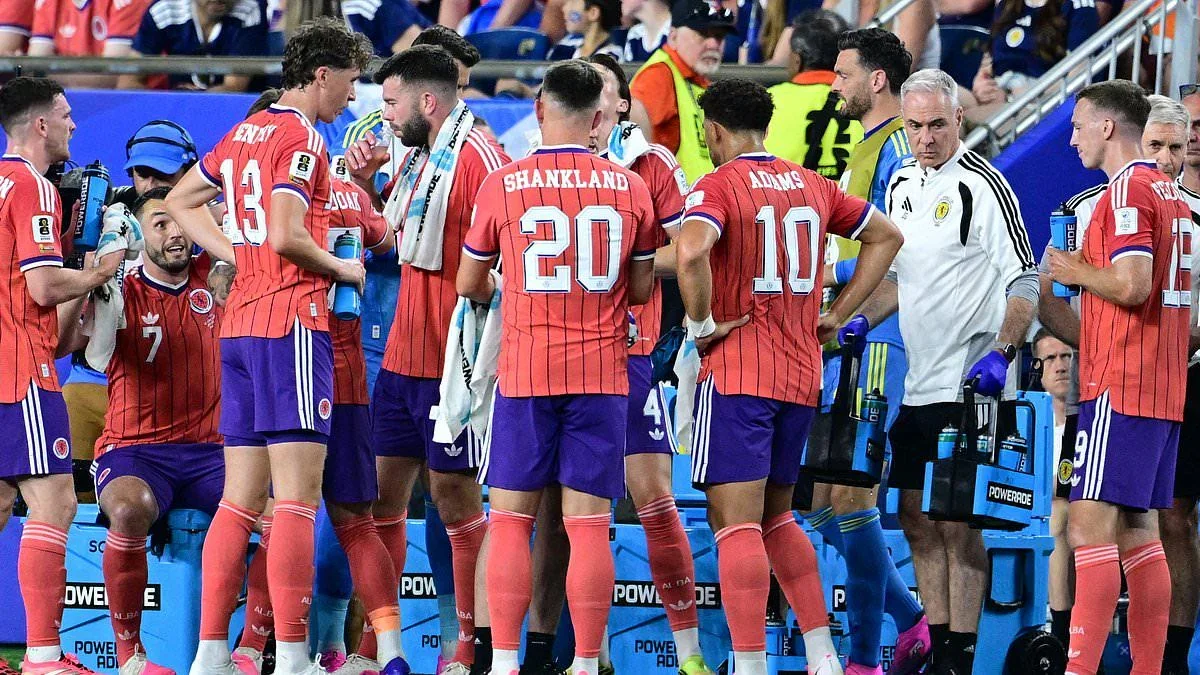
FIFA's mandatory three-minute hydration breaks at the FIFA World Cup 2026 were meant to protect players in a North American summer — but after the opening week they have become one of the tournament's most debated features. Referees stop play around the 22nd minute of each half in all 104 matches, regardless of temperature, roof coverage, or humidity. Players, coaches, broadcasters, and medical experts are now split over whether the pauses are essential welfare measures, tactical timeouts that reshape results, or unnecessary interruptions when conditions are mild.
What FIFA mandated — and why
The rule was announced in December 2025 and rolled out after the sweltering 2025 FIFA Club World Cup in the United States, when soaring temperatures and oppressive humidity fuelled player-welfare concerns. Manolo Zubiria, FIFA's Chief Tournament Officer for the USA, told broadcasters in Washington DC that every game would get a break "no matter where the games are played, no matter if there's a roof, temperature-wise" — three minutes from whistle to whistle in both halves, with stoppage time added back at the end of each period.
That uniformity is deliberate. FIFA argues equal conditions for all teams matter more than weather-triggered discretion. If an injury stoppage overlaps the 20th or 21st minute, the referee addresses timing on the spot rather than skipping the break entirely.
The approach differs sharply from the 2014 World Cup in Brazil, where FIFA introduced "cooling breaks" only when the Wet Bulb Globe Temperature (WBGT) reached roughly 32°C (90°F) — at the 30th and 75th minutes. In 2026, breaks run inside climate-controlled venues with retractable roofs and on cool evening kickoffs in the Bay Area alike.
Heat, humidity, and the medical gap
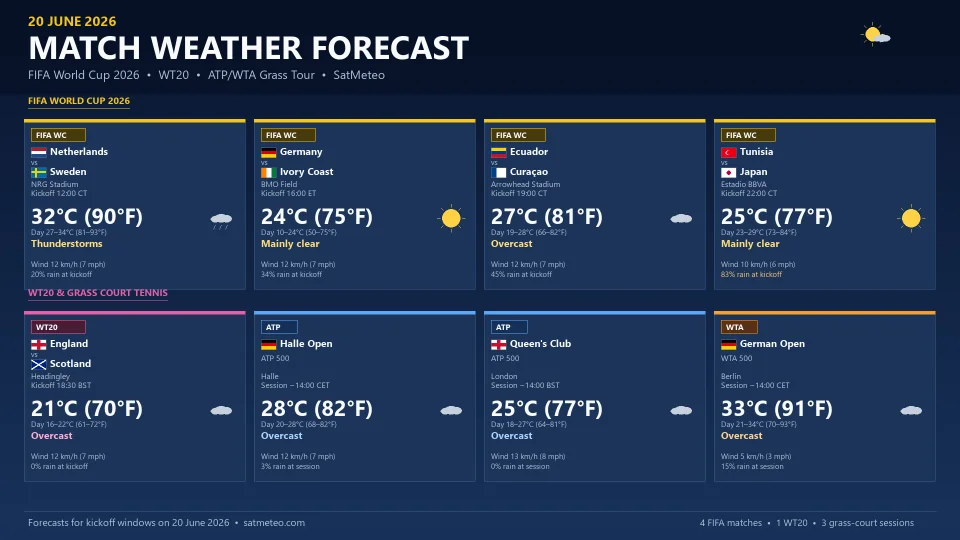
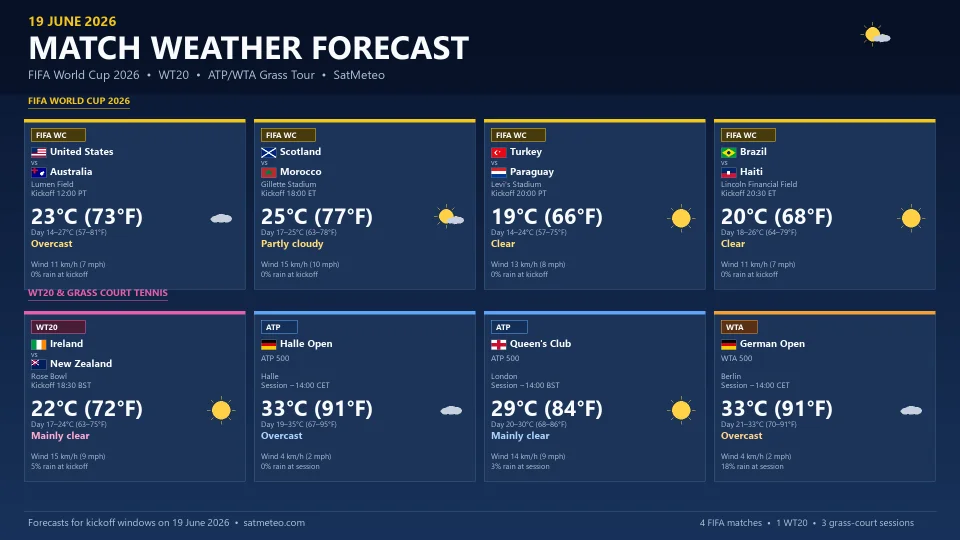
North American host cities still face real thermal stress. Afternoon kickoffs at open-roof venues such as Hard Rock Stadium in Miami and NRG Stadium in Houston can combine air temperatures above 32°C (90°F) with Gulf humidity that limits sweat evaporation. Climate researchers have warned that several 2026 venues are likely to exceed heat-related "high risk" thresholds during daytime slots — especially as climate change pushes summer thermal stress higher than at the 1994 World Cup on the same continent.
Medical experts broadly support hydration pauses but say three minutes is too short. Douglas Casa, CEO of the Korey Stringer Institute, told reporters the breaks "absolutely need to be longer than three minutes — at least five minutes for each break and preferably six" to allow meaningful recovery. Mike Tipton of the University of Portsmouth's Extreme Environments Lab noted that climate-driven increases in environmental thermal stress make afternoon fixtures at some venues particularly demanding.
FIFA frames the measure as player welfare. Critics counter that coaches are allowed to deliver tactical instructions during the stoppage — blurring the line between cooling and coaching.
Momentum on the pitch: opening-week examples
Early group-stage games have already fed the "momentum break" narrative — the idea that the team on top loses rhythm while trailing sides regroup.
- Germany vs Curaçao in Houston: World Cup debutants Curaçao equalised in the 21st minute to make it 1–1 against Germany. The referee signalled a hydration break moments later. When play resumed, the smallest nation ever to qualify by population could not hold the line — Germany won 7–1 after Julian Nagelsmann used the pause to rally his side.
- Brazil vs Morocco in New Jersey: Brazil trailed 1–0 at the break in the first half. Carlo Ancelotti gathered his players during the stoppage to tweak the system; six minutes after the restart Vinícius Júnior levelled with a brilliant strike. Ancelotti said afterwards that the pause let him "make a tactical adjustment that can be very good."
- Netherlands vs Japan in Arlington, Texas: The Netherlands led 2–1 going into the second-half hydration break but drew 2–2 after play resumed — another case where the interruption coincided with a swing in control.
- South Korea vs Czech Republic: The Czech Republic were on top in the first half before the break ended their spell of pressure; they lost 2–1 after momentum shifted.
- Spain vs Cape Verde in Atlanta: Spain's opening 0–0 draw on 15 June featured the now-familiar scene of La Roja lining up for fluids midway through the half — in a venue with a retractable roof and temperature control, where coach Luis de la Fuente had already backed the measure as a chance to "let them breathe."
Correlation is not causation — Scotland, Australia, and Canada also scored soon after breaks in other fixtures — but the pattern is prominent enough that former Spain midfielder Juan Mata told ITV Sport that as a player he would have disliked a three-minute stop in each half: "When you're losing, you want to score, and when you're winning you want to keep the ball."
Players vs coaches: a tactical divide
Coaches have largely embraced the pauses as structured timeouts. Belgium's Rudi Garcia called them "a coaching break more than a cooling break" and said they were "very good" for delivering tactical information. France's Didier Deschamps described the tournament as "four quarter times" and welcomed the chance to "adjust a couple of things." USA head coach Mauricio Pochettino took the opposite view: "I don't like it. I only like it when the conditions are extreme. But when the conditions are good, it is unnecessary."
Among players, Netherlands captain Virgil van Dijk told reporters he dislikes the commercial feel when broadcasts cut away and would prefer breaks judged game by game rather than mandated everywhere. Belgium midfielder Youri Tielemans acknowledged the fairness argument — "if you do it in some cities, you should do it for everyone" — but noted that in cooler host cities the stoppages may feel redundant.
United States women's national team coach Emma Hayes, speaking to ITV Sport, coined the phrase many pundits have adopted: "I call them momentum breaks." When a team is dominating, she said, the pause helps the side losing control; when you are struggling, you welcome it.
Broadcast controversy
FIFA allows broadcasters to cut to commercials 20 seconds after the referee signals a hydration break and requires a return to live action 30 seconds before the restart. Britain's ITV and Spanish-language Telemundo opted not to show ads during the stoppages so viewers could watch players and coaches interact. U.S. rights-holder Fox reportedly overran advertisements during the hydration break in the tournament opener, Mexico vs South Africa opener, at Estadio Azteca — reinforcing suspicions among critics such as former England forward Ian Wright that the breaks double as ad slots dressed up as player welfare.
Former Arsenal striker Wright told ITV he believed American broadcasters had "used the fact that it's for the players, but it's not for me." FIFA maintains the primary purpose is on-pitch recovery; the commercial window is secondary to broadcast contracts that fund the tournament.
What to watch as the group stage continues
With breaks fixed at minute 22 in every half, managers are already planning around four effective segments per match. Teams that press high early may find a trailing opponent reset at the first pause; sides protecting a lead late in a half must survive an enforced stop that can blunt rhythm. In hot afternoon slots, the welfare case is strongest; in roofed or evening fixtures, the debate will stay louder than the thermometer.
Whether FIFA extends break length in future tournaments — as Casa and other heat researchers recommend — may depend on how many afternoon games push WBGT toward critical thresholds and whether any heat-related incidents emerge across Mexico, the United States, and Canada.
Track World Cup 2026 heat and match weather on SatMeteo
From mandatory hydration stops and WBGT risk at Miami and Houston to kickoff conditions at every host venue, weather will keep shaping how these pauses are perceived. Follow Germany vs Curaçao, Brazil vs Morocco, Netherlands vs Japan, and Spain vs Cape Verde, browse the full World Cup 2026 schedule, and use the live temperature map to compare heat and humidity building across North American host regions in real time.