




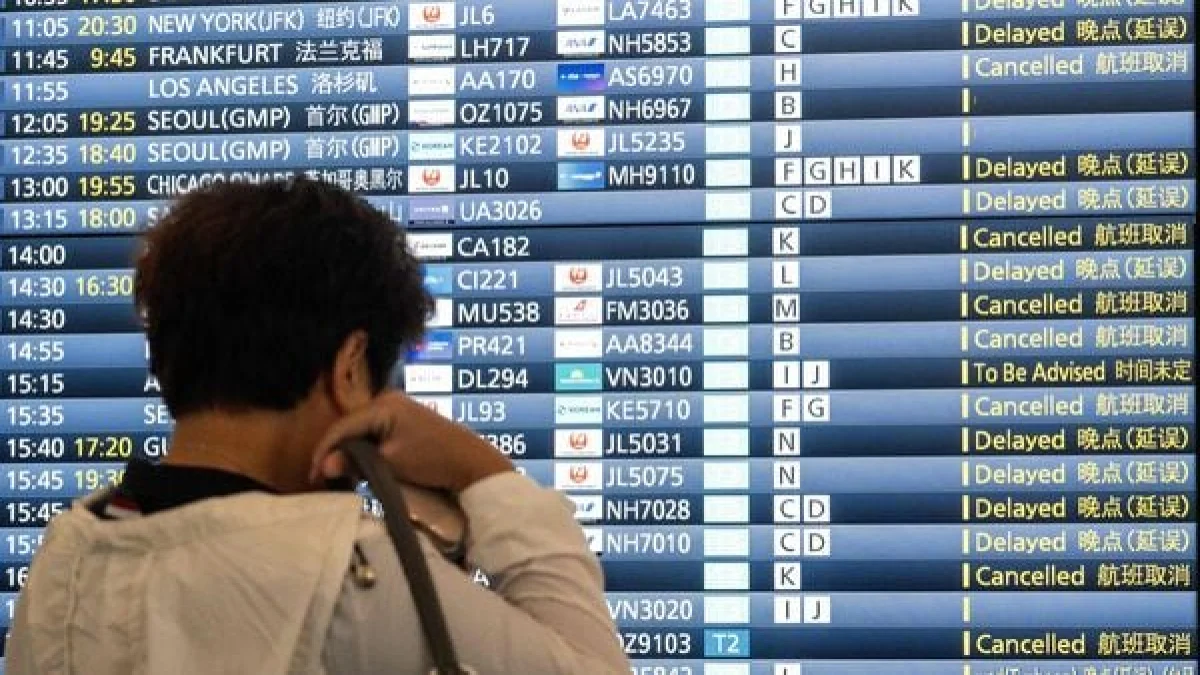
Severe thunderstorms rolling through northeastern Illinois repeatedly halted operations at Chicago's two busiest airports — O'Hare International (ORD) and Midway International (MDW) — leaving more than 1,000 flights delayed or canceled across two days. The timing could hardly be worse: the disruption hit just as the FIFA World Cup 2026 opened on 11 June and fans began moving between North American host cities, many connecting through Chicago even though the city is not a tournament venue.
Two days of ground stops: 10–11 June timeline
The airport chaos unfolded in waves rather than a single afternoon burst:
- Wednesday 10 June: A powerful derecho — a long-lived windstorm — tore across northern Illinois with gusts above 130 km/h (80 mph) in parts of the metro. The Federal Aviation Administration issued ground stops at both ORD and MDW as thunderstorms parked over the airfields. An initial O'Hare stop expired around 17:30 local time, but a second stop followed near 18:44 and ran until roughly 20:00. Midway remained under stop conditions until about the same window.
- Thursday 11 June: A second round of severe weather — part of the same frontal setup that later produced strong tornadoes south and west of the city — triggered fresh ground stops by early afternoon. By 13:30 Central time, FAA advisories showed 704 delays and 283 cancellations at O'Hare, plus 108 delays and 34 cancellations at Midway — nearly 1,130 impacted flights in a single snapshot. Delays continued into the evening as a Moderate Risk severe-weather outlook covered the Great Lakes on World Cup opening day.
- Friday 12 June onward: Airlines worked through backlogs as fans headed toward opening weekend fixtures, including United States vs Paraguay at SoFi Stadium in Inglewood, California. Missed connections at ORD remained the main World Cup travel risk for Midwest passengers.
Why lightning shuts down a global hub
Chicago is one of the world's highest-volume aviation nodes. When thunderstorms sit directly over ORD or MDW, air-traffic managers issue ground stops — halting all inbound traffic to the affected airport — or ground delay programs that hold departures at their origin cities. On 11 June, average departure delays at O'Hare exceeded seven hours during the peak ground-delay window.
Lightning is the immediate trigger. Airlines and the FAA suspend outdoor ramp work when cloud-to-ground strikes are detected within roughly 8–13 km (5–8 miles) of the airfield — the same radius used at World Cup stadiums for match suspensions. Even brief pauses create backlogs at hubs where United, American, and Southwest schedule tight turnarounds. Wind gusts of 117 km/h (73 mph) were recorded at Midway shortly after 16:00 on 10 June, adding crosswind limits and debris on taxiways to the slowdown.
World Cup travel: matches unaffected, connections are not
The tournament's opening match kicked off on schedule on 11 June. No World Cup fixture was canceled by the Midwest storms. The pain landed on logistics: ORD and MDW serve as primary connection points for international and domestic passengers heading to host cities from Los Angeles to Philadelphia.
Major carriers issued weather waivers for Chicago tickets purchased before 9–10 June, allowing rebooking without change fees through mid-June. That helped on paper, but terminal queues still stretched for hours as passengers tried to reach United States vs Paraguay and other opening-weekend games. Fans with a single connection through Chicago should build at least one extra travel day during active severe-weather patterns.
Broader Midwest context
The airport disruption sat inside a much larger severe-weather episode. The National Weather Service confirmed multiple tornadoes across northern Illinois and northwest Indiana on 11 June, including preliminary EF-3 tracks near Streator, Illinois, and Kouts, Indiana, plus straight-line wind damage in the Chicago metro. More than 650,000 customers lost power across eight states by early 12 June. The same humid air mass that fueled the storms pushed heat indices above 38°C (100°F) along the East Coast later in the week — a separate but compounding stress on travel networks already strained by World Cup demand.
What travelers should do
- Check hourly forecasts for Chicago and both airport weather pages — O'Hare and Midway — before leaving for the airport; convective risks often peak between 11:00 and 21:00 local in June.
- Monitor your airline app rather than assuming a morning departure will hold; ground stops can zero out departure boards within minutes.
- Pack medications and a change of clothes in carry-on; checked bags often miss tight rebooked connections after hub delays.
- If you are connecting to a World Cup host city, consider alternate hubs or an earlier travel day when the Storm Prediction Center highlights Enhanced or Moderate Risk across the Great Lakes.
Track Chicago airport weather on SatMeteo
From lightning holds and ground-stop timing to tornado debris on approach paths, conditions at O'Hare and Midway will keep shaping World Cup travel through the summer storm season. Check hourly outlooks for Chicago, follow United States vs Paraguay for the United States' opening home match, and watch local storm coverage on the NBC Chicago YouTube channel when severe weather threatens the region's flight corridors.