




In a country celebrated for four distinct seasons, Japan adds a fifth that bridges spring and summer: tsuyu, the rainy season. The name translates as “plum rain” because it coincides with the ripening of Japanese plums — unlike the gentle showers of April, tsuyu brings a more persistent pattern of cloud, humidity and passing downpours across most of the archipelago. In June 2026, that front is active on Honshu while southern and northern extremes already tell two very different stories.
What tsuyu is — and where it does not reach
Tsuyu is characterized by prolonged rainfall and high humidity, affecting most of Japan with the notable exception of Hokkaido, which avoids the sticky, week-long damp that defines the season farther south. It does not typically rain all day, every day — but grey skies, mist and the feeling of damp air can linger even when showers pause.
The rainy belt advances from south to north. Okinawa and southern Kyushu usually see tsuyu first, from mid-May toward late June; Shikoku and western Honshu follow in early June; Kansai and Kanto join through mid-July; Tohoku arrives later, sometimes stretching toward late July or early August with somewhat less intensity than in the south.
Regional outlook: Tokyo, Naha and Sapporo
For most travellers, the core tsuyu window on Honshu runs from early June to mid-July — roughly 7 June to 19 July in Kanto-Koshin and 6 June to 19 July in Kinki, based on Japan Meteorological Agency long-term averages. Three cities illustrate how differently the season can feel across Japan:
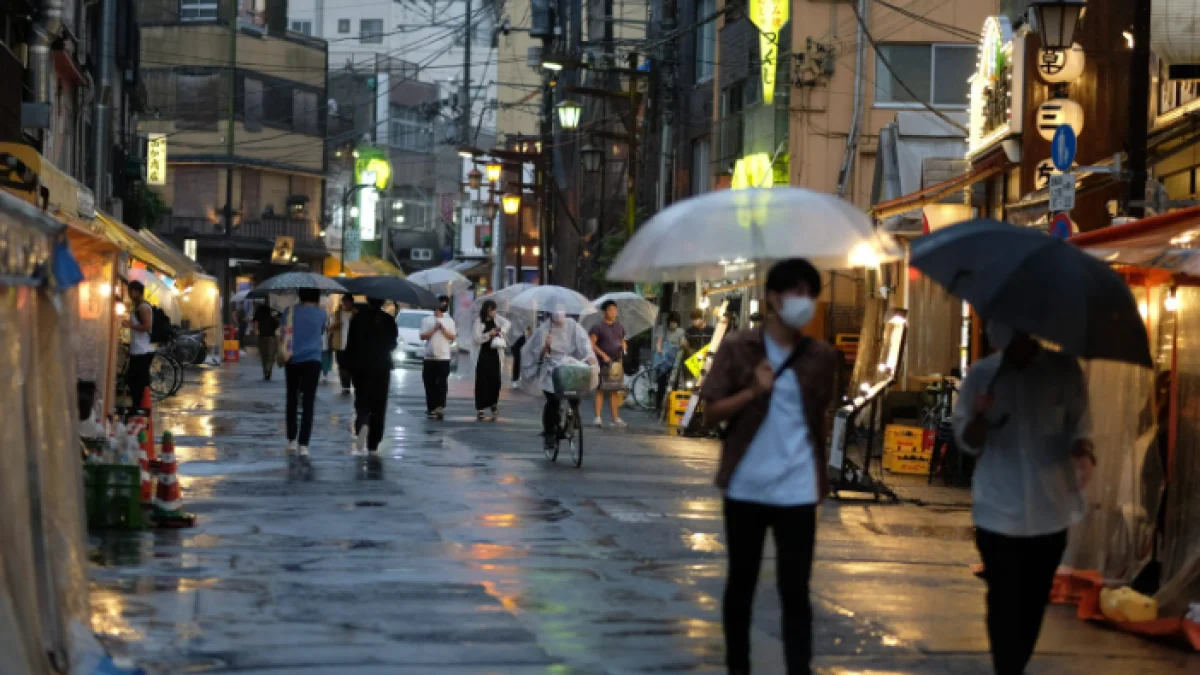
- Tokyo (Kanto-Koshin): Official tsuyu start 7 June 2026. The city has a distinct urban rhythm — morning commutes often run under drizzle, while afternoons can clear unexpectedly. Prolonged sunny breaks known as tsuyu no nakayasumi (“breaks in the rainy season”) can last from a few days to more than a week when high pressure builds over the Kanto plain.
- Naha (Okinawa): Japan’s southernmost prefectural capital enters tsuyu weeks before Honshu — typically from early May toward late June. Naha often sees the rainy front first, with warm, saturated air and higher daily rain chances while mainland cities are still dry. Travellers island-hopping south should pack for humidity before Tokyo’s season even begins.
- Sapporo (Hokkaido): Japan’s northern gateway city sits outside the classic tsuyu calendar. While Sapporo still sees rainy days in June and July, it avoids the prolonged humid spell that defines the season on Honshu — one reason northern summer travel stays popular while Kanto and Kansai weather sticky skies.
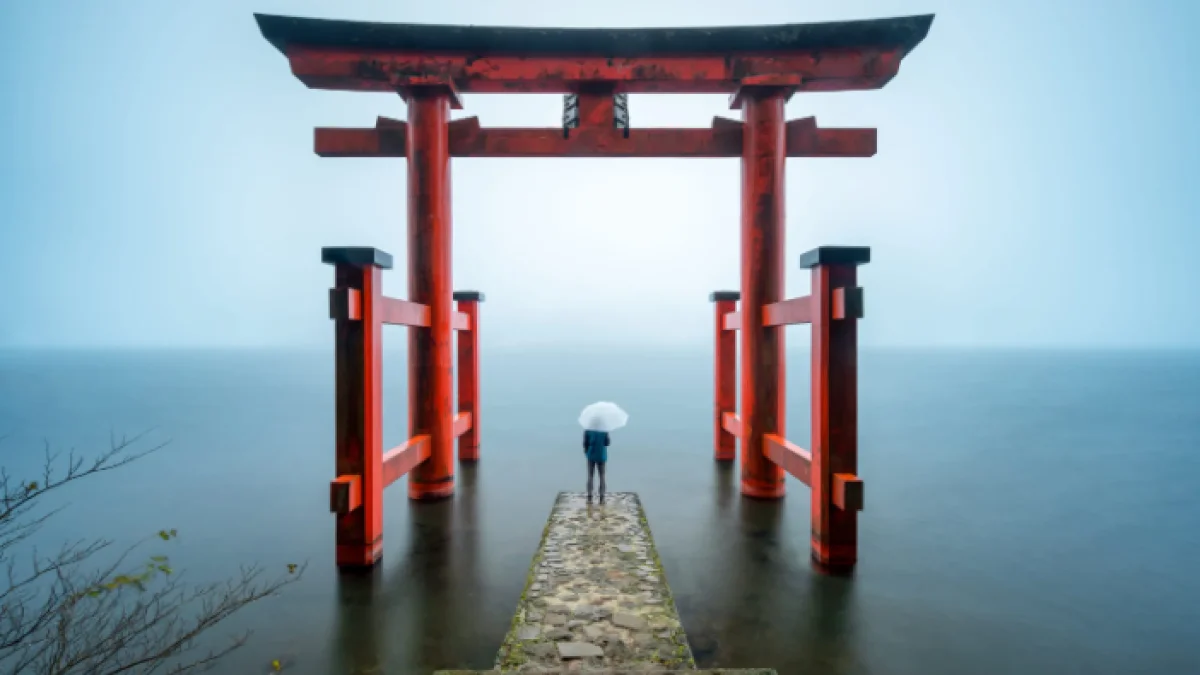
Between those poles, Kansai hubs such as Kyoto and Osaka declared tsuyu on 4 June 2026, and misty day-trip destinations such as Hakone — framed by Lake Ashi’s torii gates — capture the season’s atmospheric side when drizzle and low cloud roll across the mountains south of Tokyo.
What the weather actually feels like
Travellers notice three variables most: humidity, temperature and rainfall texture. Humidity makes the air feel sticky and heavy on non-rainy days; temperatures on Honshu often sit between 22°C and 30°C (72°F and 86°F); rain ranges from light drizzle to heavy downpours, sometimes lasting several days but rarely falling continuously from dawn to dusk.
For visitors from drier climates, humidity can feel harder than the rain itself — short walks may leave clothing damp, and powerful indoor air conditioning in trains, malls and museums creates sharp temperature swings that make layering worthwhile even in June.
While the main typhoon season runs from July to October, early typhoons can occasionally affect southern Japan from June onward — a separate hazard from the slow, humid tsuyu front itself.
Silver linings: nakayasumi, hydrangea and quieter sights
Tsuyu is not only inconvenience. Tsuyu no nakayasumi delivers welcome dry spells for outdoor plans. The season also coincides with ajisai (hydrangea) blooms that thrive in humid conditions, painting temples and parks in blue, purple and pink — one reason photographers accept the damp. After Golden Week’s domestic travel peak, popular attractions often see lighter crowds until school holidays build later in July.
Leaning into the season rather than fighting it helps: compact wind-resistant umbrellas from convenience stores (often ¥500–¥800), waterproof footwear with grip, quick-drying layers, and indoor anchors such as museums, onsen hot springs, department-store depachika food halls, and traditional teahouses where rain on temple roofs becomes part of the experience.
Track Japan tsuyu weather on SatMeteo
Because shower timing and nakayasumi breaks shift quickly, rely on short-range hourly forecasts rather than week-ahead promises. Compare conditions across the country: check Tokyo for Kanto drizzle and afternoon clearings, Naha for early southern rain, and Sapporo for Hokkaido’s drier northern pattern. Use the live temperature map to see how humidity and cloud cover spread across Japan as the rainy front holds through July.